
Let's be real about hormonal birth control and pleasure
Birth control changes your body. Not everyone talks about the pleasure side of that equation, but they should. Whether you just started the pill, switched from an IUD to the implant, or adjusted your dosage, the hormonal shift touches everything from lubrication to desire to how your clitoris actually responds to stimulation.
The good news: your lemon vibrator is still your best tool. You just might need to use it differently.
How birth control actually affects arousal and sensitivity
Most hormonal birth control suppresses or shifts your natural estrogen and testosterone. This matters because both hormones drive sexual response. Estrogen keeps tissue thick and well-lubricated. Testosterone drives desire and speeds up arousal. When either drops, your body doesn't malfunction. It just operates under different parameters.
Here's what typically happens in the first 1-3 months of starting or switching contraception:
- Clitoral sensation becomes less responsive initially, then often normalizes or improves
- Lubrication decreases (sometimes significantly)
- Desire might dip, spike, or stay exactly the same depending on the method
- Arousal takes slightly longer to build
- Orgasms may feel different in intensity or shape
Some of my clients report that switching birth control options gave them access to pleasure they never had before. Others felt like they lost their edge for a few months, then got it back. Both experiences are normal.
Why your lemon clitoral vibrator is your advantage right now
Unlike traditional vibrators that rely on direct friction, lemon suction toys like the Lem use gentle air-pulse technology that works with hormonal fluctuations rather than against them. They don't require the same level of natural lubrication or clitoral engorgement to be effective.
When you're navigating hormonal changes from birth control, this matters. A lemon vibrator can deliver stimulation without the friction overload that makes hormonal skin feel raw or oversensitive.
The suction mechanism also bypasses some of the surface-level numbness that happens during hormonal transitions. It engages deeper nerve clusters that often respond when the top layer feels muted.
Your week-by-week adjustment plan
Weeks 1-2: Go slow and observe.
Start at settings 1-2 on your lemon vibrator. Your goal right now isn't orgasm. It's data gathering. How does each setting feel? Is there tingling, numbness, heightened sensitivity, or nothing at all? Most people assume "nothing" means broken. It usually means your body is recalibrating.
Set aside 10-15 minutes without pressure. Use lubricant even if you think you don't need it. Switching birth control often creates a subtle dryness that isn't obvious until you're mid-session.
Weeks 3-4: Extend warm-up time.
If you're someone who used to climax in five minutes, build in an extra 10 minutes of foreplay or solo touch before you reach for your lem vibrator. Hormonal birth control doesn't usually kill arousal capacity. It just changes the tempo. Honoring that new tempo makes everything else click.
Try alternating between your hands and the lemon vibrator. Touch your inner thighs, your breasts, your neck. Let the vibration be the finish line, not the entire journey.
Weeks 5-8: Adjust your pattern.
Once you've settled into your new hormonal baseline, you might find that a pattern that worked before now feels either underwhelming or too intense. This is a good sign. Your nervous system is adapting.
Many people find that pulsing patterns (2, 4, 6) work better than steady vibration during hormonal transitions. Pulsing gives your nerve endings a moment to reset between waves, which makes them feel more novelty and intensity.
The lubricant decision that actually matters
If birth control has created any dryness, the type of lubricant you choose genuinely affects the experience. Water-based lubes absorb quickly, which is fine for longer sessions. Silicone-based lubes last longer but can degrade your toy. Hybrid lubes (water and silicone blend) give you both.
Honestly though, don't overthink this. Grab a water-based lube and use it generously. The goal is glide, not authentic natural lubrication. There's zero shame in that.
When hormonal changes affect desire, not just sensation
Sometimes birth control crushes desire entirely. If this is happening to you, the first move is checking with your provider. Low libido is a documented side effect of some contraceptives, and there are alternatives. Don't white-knuckle your way through it.
If you've confirmed it's the contraceptive and you want to explore sensation anyway, try the settings that felt overwhelming before. Counterintuitively, low desire sometimes pairs with heightened responsiveness to sensation. Your brain isn't interested, but your body might surprise you.
The lemon vibrator works particularly well here because the suction sensation is novel enough to draw attention even when motivation is low.
Partnered pleasure during hormonal transitions
If you have a partner, the conversation matters more than the toy. "My birth control just changed how my body responds" is different from "I'm less attracted to you." Mixing them up tanks intimacy.
Here's what I tell couples: use the first 2-3 weeks as observation time together. Let your partner know that sensation might feel different. You're not broken. You're just recalibrating. Some couples find that incorporating the lemon vibrator into partnered sex during hormonal transitions actually strengthens connection because it removes pressure.
Your partner doesn't have to "keep up" or figure out a new rhythm solo. The vibrator handles intensity while you both adjust.
Red flags that warrant a provider conversation
If you're experiencing intense pain, severe dryness that doesn't respond to lubricant, or zero sensation returning after 8-12 weeks, contact your gynecologist or the provider who prescribed the birth control. This isn't normal, and there are solutions. Topical estrogen, a different contraceptive method, or additional treatment can reset things.
Don't assume hormonal birth control is the villain here. Sometimes it genuinely is. Sometimes it's coincidence, stress, or something else entirely wearing a hormonal disguise.
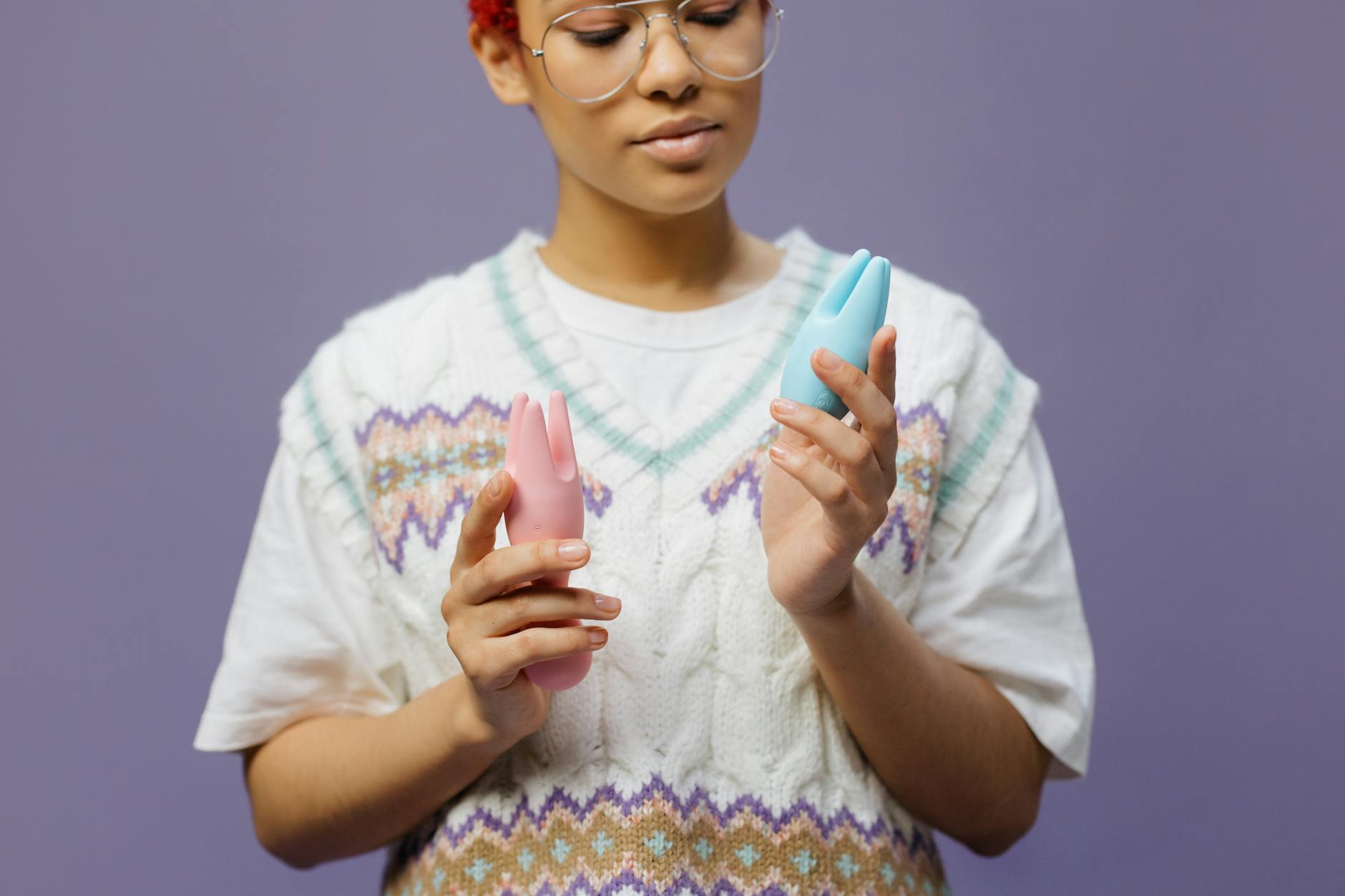
Photo by cottonbro studio on Pexels
How to talk to yourself (and your body) during this transition
Hormonal changes from birth control often trigger frustration. "Why doesn't my body work like it used to?" is a real question. The answer: because your body isn't the same. It's not worse. It's different.
I've found that shifting from "fixing" your response to "discovering" your new response changes everything. Instead of trying to recreate your old climax, explore what this new one feels like. Maybe it's smaller. Maybe it's longer. Maybe it's more concentrated in one spot. All of those are interesting data, not failures.
Your lemon vibrator becomes a research tool, not a performance meter.
FAQ: Hormonal birth control and lemon vibrators
How long does it usually take for pleasure to feel normal again after starting birth control?
Most people notice stabilization within 4-8 weeks. Some feel back to baseline in 2-3 weeks. A smaller group takes 3-4 months. If you're outside that window with zero improvement, talk to your provider. It might be the wrong contraceptive for your body.
Can switching birth control methods make pleasure better, not just different?
Absolutely. Some people feel more desire and sensation on the pill than they did with an IUD, or vice versa. The shift isn't always a loss. Sometimes it's an upgrade. You won't know until you're a few weeks in and your hormones have settled.
Is it normal for my lemon vibrator to feel too intense after starting birth control?
Yes. Heightened sensitivity sometimes happens in the first week or two as your body adjusts. If you're experiencing this, dial down to settings 1-2 and give it time. You can always build back up. Forcing intensity when everything feels raw only delays adjustment.
Should I try a different toy if my lemon vibrator doesn't feel the same on new birth control?
Not immediately. Stick with it for at least 6-8 weeks. The familiar sensation actually helps your nervous system adapt. Once you're stable, you can experiment. But switching toys and adjusting to new hormones simultaneously creates too many variables.
Does hormonal birth control affect orgasm ability itself, or just how it feels?
It typically affects how it feels and how long it takes to reach it. Orgasm ability usually stays intact. The pathway changes, not the destination. This is important because it means you're not broken. You're just taking a slightly different route.
My desire completely disappeared after starting birth control. Is this fixable?
It depends. If it's the contraceptive itself, switching methods often helps. If it's stress, relationship issues, or something else, the birth control is a red herring. Talk to your provider, and consider working with a therapist if life stuff is heavy right now. The lemon vibrator can't solve everything, but it can help you explore sensation once you've addressed the bigger picture.
The bottom line
Hormonal birth control changes your body. Your pleasure adapts. Your lemon vibrator is flexible enough to work with you through that shift. The key is patience, observation, and willingness to discover what your new body enjoys instead of forcing it back into your old patterns.
You're not losing pleasure. You're rerouting it. And that journey is worth taking slowly.
If you'd like to explore more about pleasure during life transitions, check out how lemon vibrators work differently after major life changes. And if you're navigating sensitivity shifts specifically, this guide on adjusting lemon vibrator settings for sensitive bodies walks through the nuances.
Your pleasure matters. Your body adapts. And you deserve both patience and good information as you find your way through hormonal change.