Let's start with the truth about sensitive clitorises
Your clitoris isn't broken. It's not too much. It's not asking for too little. It's just communicating, and most of us have been taught to ignore that voice.
A sensitive clitoris means you have more nerve endings firing, faster arousal, and often a lower threshold for overstimulation. That's not a limitation. It's actually a biomechanical advantage, but only if you know how to work with it instead of against it.
Why standard vibrator settings don't work for sensitive nerves
Most vibrators, even designed ones like the lemon vibrator from Hello Nancy, come preset to mid-range intensity because it works for the widest audience. For people with sensitive clitorises, that's like trying to read with the room lights at full blast. You need them dimmed.
The science: clitoral sensitivity is partly about nerve density (some people are born with more), partly about hormones (estrogen, arousal state, cycle phase), and partly about previous stimulation patterns. If you've spent years using high-intensity vibrators, your clitoris adapts by becoming less responsive. If you're naturally sensitive, standard settings can feel sharp, overwhelming, or almost painful.
The lemon vibrator (also called the lem vibrator or lemon sucker) works differently than traditional vibrators because it uses gentle suction rather than rapid vibration. But that doesn't mean it's automatically calibrated for your nervous system. You need to know how to adjust it.
Finding your starting point
First, forget what you think you're supposed to feel. Some people report immediate, intense pleasure at pattern 3 on a clitoral vibrator. Others need patterns 1 and 2 exclusively. Neither is normal or abnormal. Both are correct.
Start with external exploration first, before using the lemon vibrator at all. Use your finger or a soft cloth to see what amount of direct pressure feels good without being sharp. This gives you a baseline for how much stimulation your specific nervous system wants.
Then, when you pick up your Hello Nancy lemon vibrator for the first time, use pattern 1 (the gentlest setting) and hold it against the side of your clitoris, not directly over it. The suction sensation is different from vibration, and your body needs time to acclimate.
The pattern ladder approach
I recommend thinking of lemon vibrator settings as a ladder, not a button you either push or don't. You climb one step at a time.
Pattern 1 is the entry point. It's shallow suction with minimal intensity. Stay here for at least 3-5 sessions before moving up. Your clitoris isn't lazy if you're still enjoying it at this level. Your clitoris is smart. Honor that.
Pattern 2 adds slightly more suction and a subtle rhythm. This is where many people with sensitive clitorises find their sweet spot. You get enough stimulation to build arousal without tipping into numbness or discomfort.
Pattern 3 and beyond are available, but you don't have to go there. Going higher doesn't mean better. It means different. A lot of people confuse intensity with effectiveness.
The goal isn't to reach the highest setting. The goal is to find the setting that gets you off consistently without pain, numbness, or that depleted feeling afterward.
Positioning and angle matter more than you think
With a lemon clitoral vibrator, where you place it changes everything. Direct contact over the clitoris itself can be too much if you're sensitive. Try these positions instead.
Side-to-side contact. Hold the lem vibrator against the side of your clitoris or the soft tissue around it (the vulva), not the glans directly. The sensation travels inward without the intensity of direct contact. This is how many sensitive people find their rhythm.
Indirect contact. Place the lemon sucker over your outer labia and let the sensation travel through the tissue to your clitoris. It's more diffused, less sharp, and lets you build arousal gradually.
The hood. If you're sensitive to direct contact, stimulate through the clitoral hood. You get all the benefit with a buffer between the toy and your most sensitive tissue.
Angle matters too. Experiment with slight pressure changes. You might find that a lighter touch with the suction-based lemon vibrator works better than applying firm pressure.
Lubrication and tissue prep
Here's something most guides skip: a sensitive clitoris often needs more lubrication, even though there's no dryness involved. Lubrication isn't just for penetration. It reduces friction between the toy and your skin, which means less overstimulation sensation and more pure pleasure.
Use a water-based lube with your Hello Nancy lemon vibrator (silicone lube can damage silicone toys). A thin layer around your clitoris and vulva changes the entire experience. The suction glides more smoothly, and you get sensation without static friction.
Also, warm-up time matters. Many people with sensitive clitorises need 10-15 minutes of arousal before direct stimulation feels good. Read erotica, watch something that turns you on, or let your partner touch you first. When your body is already aroused, your clitoris is slightly less sensitive to overstimulation because blood flow and natural lubrication have already prepared the tissue.
The pause-and-return technique
If you feel yourself building toward numbness or that overwhelming sharp sensation, you don't have to stop. You can pause.
Keep the lemon vibrator on pattern 1 or 2, but remove it from your clitoris for 30 seconds. Let the sensation reset. Then return to the same position. Repeat as many times as you need. This prevents the desensitization that happens when you overstimulate continuously, and it actually extends your session and deepens your orgasm when it comes.
Some people think they need to keep going faster and harder to maintain arousal. Actually, the opposite is often true. Strategic pausing keeps your nervous system engaged and responsive.
Partner communication if you're using the lemon sucker together
If you're using your lemon vibrator with a partner, tell them about your sensitive clitoris before you start, not during. Explain that you need patterns 1-2, not a race to pattern 5. Explain that side contact feels better than direct contact. Make it a collaboration instead of a surprise.
Many partners assume lower settings mean less pleasure, which isn't true. It means different pleasure, and usually more reliable pleasure. A partner who understands this is doing it right.
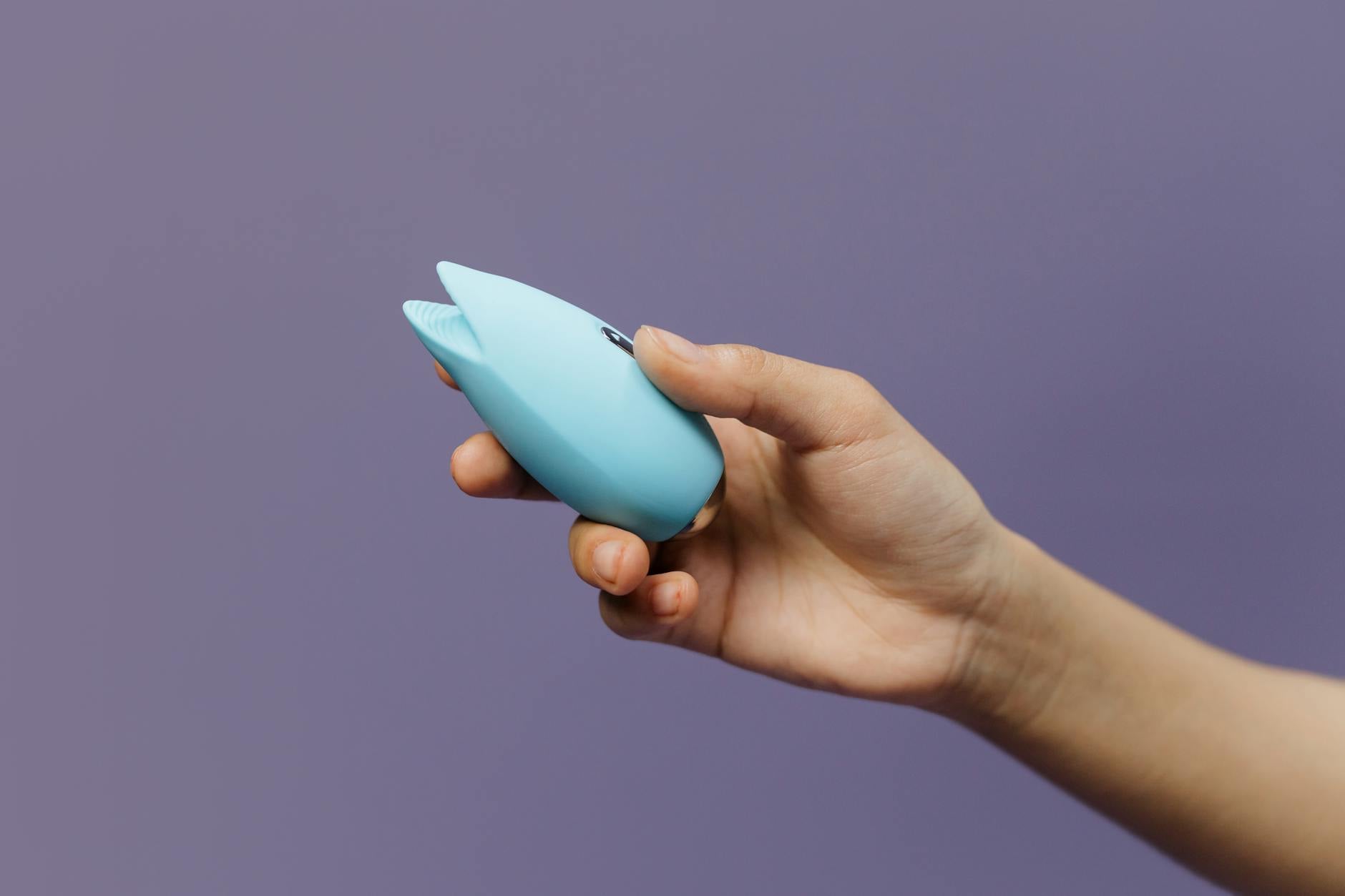
Photo by cottonbro studio on Pexels
You might also find that using a lemon vibrator for partnered foreplay without interrupting intimacy gives you specific techniques to integrate the toy into sex with a partner rather than as a separate activity.
Tracking what actually works
Keep a simple note on your phone after each session. Write down the pattern you used, the position, how long you lasted, whether you felt numbness, and how your orgasm felt. After 4-5 sessions, you'll see a pattern in what works.
You might find that pattern 2 on the side of your clitoris with lubrication gives you the best results. Or pattern 1 with indirect contact. Or some combination no one told you was possible. The only way to know is to experiment systematically instead of randomly.
This isn't about being scientific or robotic about pleasure. It's about giving your nervous system the information it needs to trust that you know what you're doing.
When to see a specialist
If you feel sharp pain (not intensity, but actual pain) during stimulation, stop and see a pelvic health physical therapist. There are medical reasons why stimulation sometimes hurts, and they're fixable.
If your sensitivity is completely new and unexpected, mention it to your doctor. Hormonal shifts, certain medications, and pelvic tension changes can affect sensitivity. A professional can help rule out anything worth investigating.
Sensitivity itself isn't a medical problem. But sudden changes are worth checking out.
The bigger picture about pleasure
Here's what I know from decades of working with couples: people with sensitive clitorises often feel shame about needing gentler settings. They think they should be able to handle more, or that their sensitivity means something's wrong. It doesn't.
Sensitivity is neutral information. It tells you something about your nervous system. What you do with that information is what matters. A person who uses patterns 1-2 on a lemon vibrator and reaches consistent, deep orgasms is having better sex than someone forcing themselves through pattern 5 to feel like they're doing it right.
Your body isn't a limitation to overcome. It's a guide to follow.
Frequently asked questions
Can a sensitive clitoris orgasm with a lemon vibrator?
Yes. In fact, people with sensitive clitorises often reach orgasm faster and more reliably with the lem vibrator than with traditional vibrators because the suction sensation is gentler and more diffused. Sensitivity doesn't prevent orgasm. Poor settings do.
Will using lower patterns on the lemon sucker take longer to orgasm?
Sometimes, not always. You're not sacrificing speed for comfort. You're finding sustainable settings that work with your nervous system instead of against it. Some people reach orgasm faster at pattern 1 than they ever did at pattern 5.
Is it normal to feel numbness or pain with clitoral vibrators?
Numbness happens when overstimulation exhausts nerve endings. It's not permanent, but it means your settings are too high. Pain is different. Sharp pain isn't normal and warrants a pelvic health assessment. Intensity without pain is fine. Pain is a signal to stop.
Should I warm up differently with a sensitive clitoris?
Yes. Spend extra time on arousal before using the lemon vibrator. Read erotica, watch content that turns you on, or have your partner build arousal manually first. When your body is already aroused, your clitoris is primed and receptive, and the toy will feel better from the start.
Can I use the lemon clitoral vibrator during sex if my clitoris is sensitive?
Absolutely. Some people find that using a lemon vibrator during sex with your partner is the best way to reach orgasm without overworking the clitoris before penetration. Timing it right means less desensitization and often deeper pleasure.
Do I need a special kind of lube for sensitive skin with the lemon sucker?
Water-based lube is safest with all silicone toys, including the Hello Nancy lemon vibrator. Avoid silicone-based lubes because they degrade silicone toys over time. Some people with sensitive skin benefit from hypoallergenic formulas, but standard water-based lube works for most.
What comes next
Your sensitivity isn't something to work around. It's information. Once you know how your clitoris actually responds to the lemon vibrator from Hello Nancy, you're no longer guessing. You're making informed choices about your own pleasure.
Start at pattern 1. Stay there longer than you think you need to. Notice what positioning feels best. Pay attention to what your body tells you. That's the whole practice.
If you want to explore more about how different bodies respond to clitoral stimulation, our guide to lemon vibrators for different body types breaks down the science and the strategies. And if you're wondering about rebuilding sensitivity after years of use, that's a different conversation entirely.
Your clitoris is smart. Start trusting it.