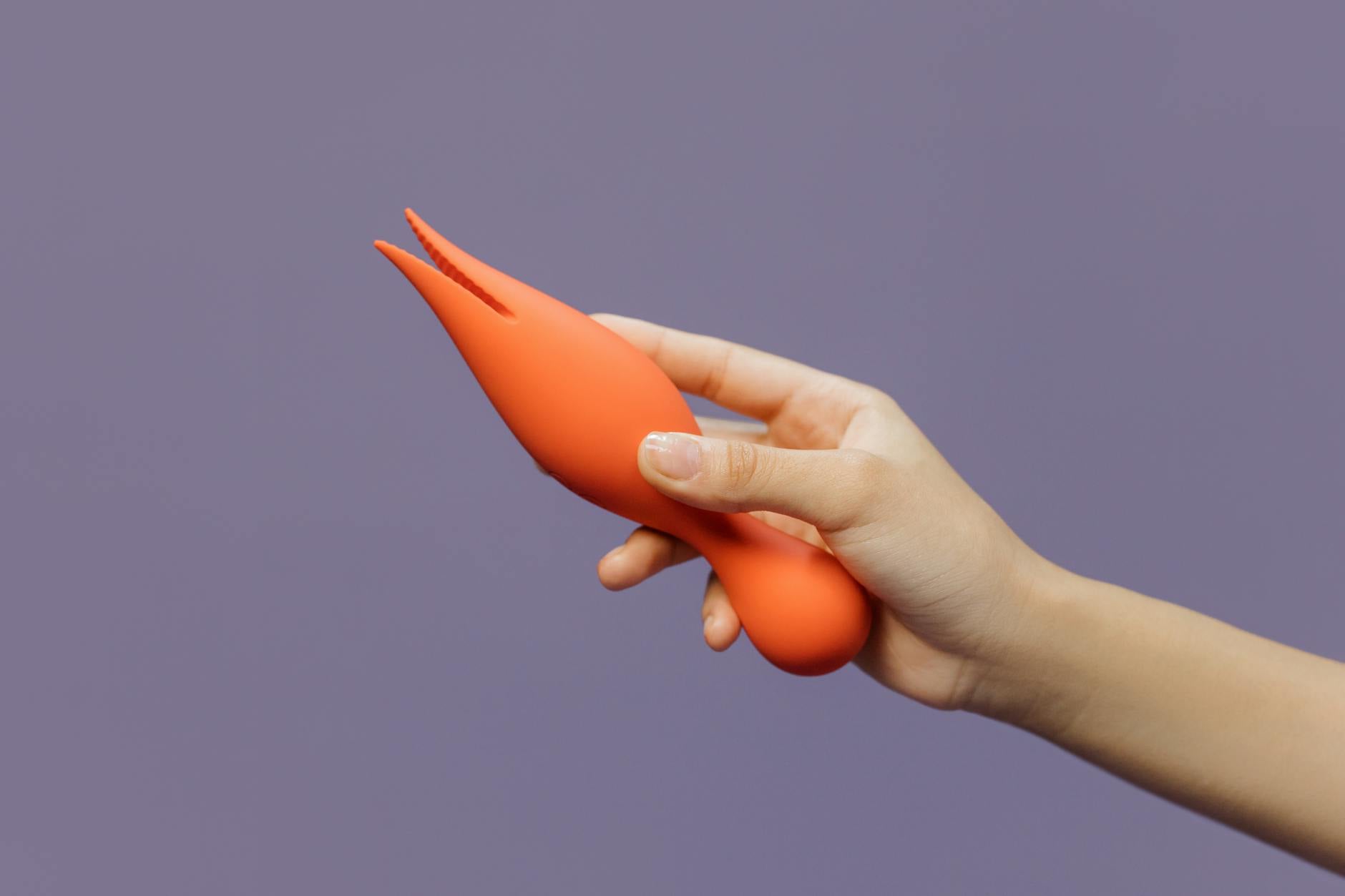
Best Lemon Vibrator Settings for Different Body Types and Sensitivity Levels
Let's be real: the idea that there's one "right" setting for everyone is nonsense. Your partner's perfect intensity might feel like overkill for you. A setting that felt amazing last week might feel flat this week. And that's not a problem. That's just your body being a body.
The reason so many people bail on lemon vibrators isn't because the device doesn't work. It's because they're using it wrong for their nervous system. Here's how to find what actually works for you.
How body type shapes what feels good
This isn't about aesthetics. It's about nerve density, tissue thickness, and blood flow.
People with smaller or more compact vulvas often have denser nerve clustering. That means lower-intensity patterns and gentler suction work beautifully. You're not broken if you can only handle pattern 1 or 2 on a lemon clitoral vibrator. You're just wired differently. Starting at the lowest setting and building slowly is your friend here.
People with more generous vulvar anatomy sometimes need stronger intensity to feel distinct sensations. The suction patterns on a lemon vibrator cover more surface area, which can feel more diffuse. Many find medium to high patterns (4-6 range) create sharper, clearer feedback. That doesn't mean you're numb. It means your tissue responds to amplitude differently.
Pelvic floor tension also matters wildly. If your pelvic floor is held tight (which happens to a lot of us under stress), even light vibration can feel overwhelming because tension amplifies sensation. In this case, your first move isn't to jump to intense settings. It's to relax the pelvic floor first. Take 2-3 minutes before you start, breathe into your belly, and let your pelvic floor soften. Then start low.
Sensitivity levels and how to calibrate
There are roughly four sensitivity ranges. Find yours.
Hypersensitive (very responsive to light touch). You're probably someone who feels everything intensely. Patterns 1-2, shortest duration sessions (5-10 minutes max), and using a light hand position rather than direct pressure. When you explore a lemon sucker, hover it slightly rather than pressing hard. Water-based lube helps too because it creates a cushion. You likely need longer recovery time between sessions, so 2-3 days is normal for you.
High sensitivity (responds well but needs some depth). Patterns 2-4 are your zone. You can handle 10-20 minute sessions and direct contact. Start at pattern 2 every time and escalate if you want more intensity. You probably orgasm pretty easily, which is great, but sometimes it happens faster than you'd like. Try longer warm-up time and lower patterns to stretch the experience out.
Moderate sensitivity (needs clear, distinct sensations). Patterns 4-6 are where you live. Direct pressure feels good. You probably need 15-25 minutes of consistent stimulation. You're the person who benefits most from varied patterns rather than just raw intensity. Switching between suction and pulse mid-session keeps things fresh. Recovery is usually 24 hours between sessions.
Low sensitivity (needs significant intensity to register much). Patterns 5-7 (the top range) and consistent, firm pressure. You might find that you don't feel much with vibration alone. Combining a lemon vibrator with other stimulation (like partnered touch or penetration) often works better than the device solo. You're not broken. You just have a higher sensory threshold, which is genuinely common.
The role of arousal and context
Here's the thing nobody tells you: your sensitivity changes depending on how aroused you are.
When you're early-stage aroused, lighter patterns and less intensity feel better. Your nervous system is still ramping up. Jumping straight to pattern 5 can feel jarring. When you're deeply aroused, you can handle more. Patterns that felt intense 10 minutes ago now feel just right.
This is why the same lemon vibrator setting you loved last Tuesday might feel wrong on Friday. If Friday involved a stressful day, interrupted foreplay, or you're not fully into it emotionally, your sensitivity tanks. That's not the device failing. That's you needing more runway.
Context matters too. Partner sex often requires different settings than solo. When someone else is involved, you're managing their pleasure too, which activates a different part of your brain. Solo time lets you get fully selfish and responsive. Many people run 1-2 intensity levels higher when they're alone because there's no cognitive load of managing someone else's experience.
Nerve density and pattern preference
Different parts of the clitoris have different nerve densities. This changes which patterns feel better, not just which intensities.
The clitoral glans (the external nub) has the highest nerve density and responds beautifully to rhythmic, pulsing patterns. Most people love patterns 3, 5, or 7 on a lemon clitoral vibrator because they're steady and predictable. Direct suction over the glans with a pulsing pattern is often where orgasm happens fastest.
The clitoral body (the internal structure that extends upward inside) responds differently. It likes broader, longer waves of stimulation and less direct pressure. Hovering the lemon vibrator slightly off the surface or using firmer pressure on surrounding tissue sometimes accesses this zone better. These sensations build more slowly but often create deeper, more full-body orgasms.
The vestibule (the tissue around the opening) prefers gentler, broader stimulation. Light patterns with the vibrator angled slightly differently than direct-on-glans positioning. If direct clitoral stimulation has ever felt raw or sore, you might be someone who prefers vestibular work first, then moving up to the glans once you're more aroused.
You don't need to memorize this. Just notice: which patterns do you naturally gravitate to? Where on your body do you position the vibrator? That's your body telling you what it needs.
Lubrication and how it changes everything
Water-based lube is non-negotiable for comfortable, pleasurable lemon vibrator use. But here's what most people miss: the amount and thickness of lube you need depends on your sensitivity.
Hypersensitive folks benefit from thicker lube that creates more of a glide. It cushions sensation. Hyaluronic acid-based lubes are great here because they're slick but not sticky.
Moderately to low-sensitivity folks often prefer thinner, wetter lubes that let more vibration get through. Water-based lubes without glycerin tend to be thinner and let the full sensation of the device come through.
Reapply lube every 5-10 minutes. This isn't because you're dry. It's because the lube gets warm and breaks down. Fresh lube refreshes the glide and sensation.
Building tolerance over time
There's a real phenomenon where regular use of strong patterns can make lighter patterns feel less satisfying. This isn't permanent numbness. It's just adaptation.
If you notice that your favourite lemon vibrator patterns stopped hitting the same way, take a week off. Use that time for partnered touch or manual stimulation. When you come back to the device after a break, sensitivity resets pretty quickly. Most people regain their usual responsiveness in 3-7 days.
Alternate patterns regularly too. If you always use pattern 4, rotate in patterns 2 and 3 on alternate sessions. Variety keeps your nervous system engaged.
The first session: how to actually test
Start with a warm-up. 5-10 minutes of manual or partnered touch before you introduce the device. Get aroused first.
Then begin at pattern 1. Yes, really. Even if you think it'll be too soft, start here. You're mapping your nervous system's response, not chasing orgasm yet. Spend 1-2 minutes at each pattern, moving up slowly. Notice where sensation starts feeling different, where it shifts from "nice" to "building," where it gets intense.
Your sweet spot is usually 1-2 patterns below where it starts feeling like too much. That's where you can stay for 10-20 minutes without fatigue.
Don't judge yourself for needing a certain setting. Someone else needing patterns 6-7 on their lemon sucker is not evidence that you're weird for living at pattern 2. You're just different. That's all.
FAQ: Settings and Sensitivity
Can lemon vibrator settings damage tissue if too high?
No. If a setting is genuinely painful or causes rawness, stop using it. But "intense" isn't the same as "damaging." Modern clitoral vibrators like the lemon design are engineered to be safe across all intensity ranges. What matters is listening to your body. If a pattern feels overwhelming, move down. Discomfort is information, not a sign the device is broken.
Why do my preferred settings change through my cycle?
Hormones affect blood flow, tissue thickness, and nerve sensitivity. Around ovulation, when estrogen peaks, many people are more sensitive and need lower intensities. In the luteal phase (after ovulation), sensitivity often drops slightly and people gravitate toward higher patterns. Track what you notice over a few cycles. Your body has a rhythm.
Is it normal to only feel lemon vibrators on the highest setting?
Yes, if that's your body's threshold. Some people just have lower nerve density or higher sensory thresholds. This isn't dysfunction. It's variation. If high patterns stop feeling great, take breaks and rotate in lower intensity. If you want more sensation, combine the vibrator with other stimulation like partnered touch.
How do I know if I'm using the right setting for partnered sex?
Ask your partner. Seriously. "Does this feel good for you? Too much?" Communication beats guessing. Many people dial down 1-2 settings when a partner is involved because you're managing two nervous systems at once. Solo, you might run pattern 5. With a partner, pattern 3 or 4 might feel perfect because you're more present and less in your head.
Can sensitivity to lemon vibrators improve over time?
Yes. If you're someone who struggled with vibration initially, consistent but gentle exposure often helps your nervous system adapt. Start low, use often (3-4 times a week), and gradually build. After a few weeks, sensations you couldn't feel clearly often become obvious. Patience works.
What if I hate all the patterns on a lemon clitoral vibrator?
First, try different positioning. Angle matters. Second, try different body zones (vestibule vs. glans). Third, use lube generously. Fourth, give it 3-4 sessions before deciding it's not for you. Your nervous system needs time to acclimate. If after real exploration it still doesn't work, that's fine. You might be a wand person or a different device person. That's not a failure.
The actual takeaway
There is no universal "best" setting. Your best setting is the one that makes you feel good right now, in this moment, in this body. It'll probably shift. That's not a problem. That's how bodies work. Start low, go slow, listen to what feels good, and adjust. Your lemon vibrator is a tool. You're the expert on how it should feel.