Let's be real about sensitivity
Not everyone wants the same thing from a vibrator. Some people crave intensity. Some people need precision. And some people need both, but only on their own terms, with full control over how much stimulation arrives and when. If you're in that last group, you've probably discovered that a standard vibrator can actually feel like too much, too fast, or in the wrong way.
That's where design matters. Lemon clitoral vibrators are engineered differently than broad-spectrum vibrators. The shape, the motor speed, the contact surface, and the control options all stack up to give you something most other toys don't: the ability to dial in exactly what your body needs.
The anatomy of control
Here's what I mean by control. Your clitoris has about 8,000 nerve endings concentrated in a tiny area. That's not a metaphor. That's real biology, and it means the difference between "perfect" and "overstimulation" can be literally millimeters of distance or a single setting change. With a lemon clitoral vibrator, you're not guessing.
The shape matters first. A rounded, tapered tip designed for direct clitoral contact is completely different from a broad wand that covers a larger surface area. When you want precision, a narrower application point lets you find the exact spot that feels good. You can hover, move slightly, and adjust angle without changing the whole experience. It's like the difference between pointing a flashlight at something versus shining a lamp across an entire room.
Then there's the motor itself. Lemon vibrators use suction and pulsation technology, which feels different from straight vibration. Instead of aggressive buzzing that numbs faster, you're getting rhythmic pressure that builds sensation without desensitizing the tissue. For people with sensitive clitorises (yes, that varies wildly from person to person), this is genuinely transformative.
Why adjustability changes everything
Most people don't want one setting. They want options. A lemon clitoral vibrator comes with multiple intensity levels and pattern choices. This isn't luxury. This is function.
Here's the practical version: You might want pattern 1 for warm-up, pattern 3 when you're getting closer to orgasm, and a gentler pulse if you want to stay in that feeling longer without tipping over. Or you might find that intensity 2 works for 80% of your sessions, with intensity 1 on days when you're tired or you've already come once. Without that granularity, you're either bored or overwhelmed.
I've worked with countless clients (over 20 years of clinical practice) who thought they just didn't like vibrators. Then they tried a tool designed for actual control, and everything shifted. They weren't broken. They were using the wrong equipment.
The ergonomic advantage
How you hold something changes how it feels. A vibrator with poor ergonomics forces your hand into an awkward position. Your hand tenses. Your forearm gets tired. Tension radiates up your arm and into your shoulders, which contradicts the whole point of pleasure.
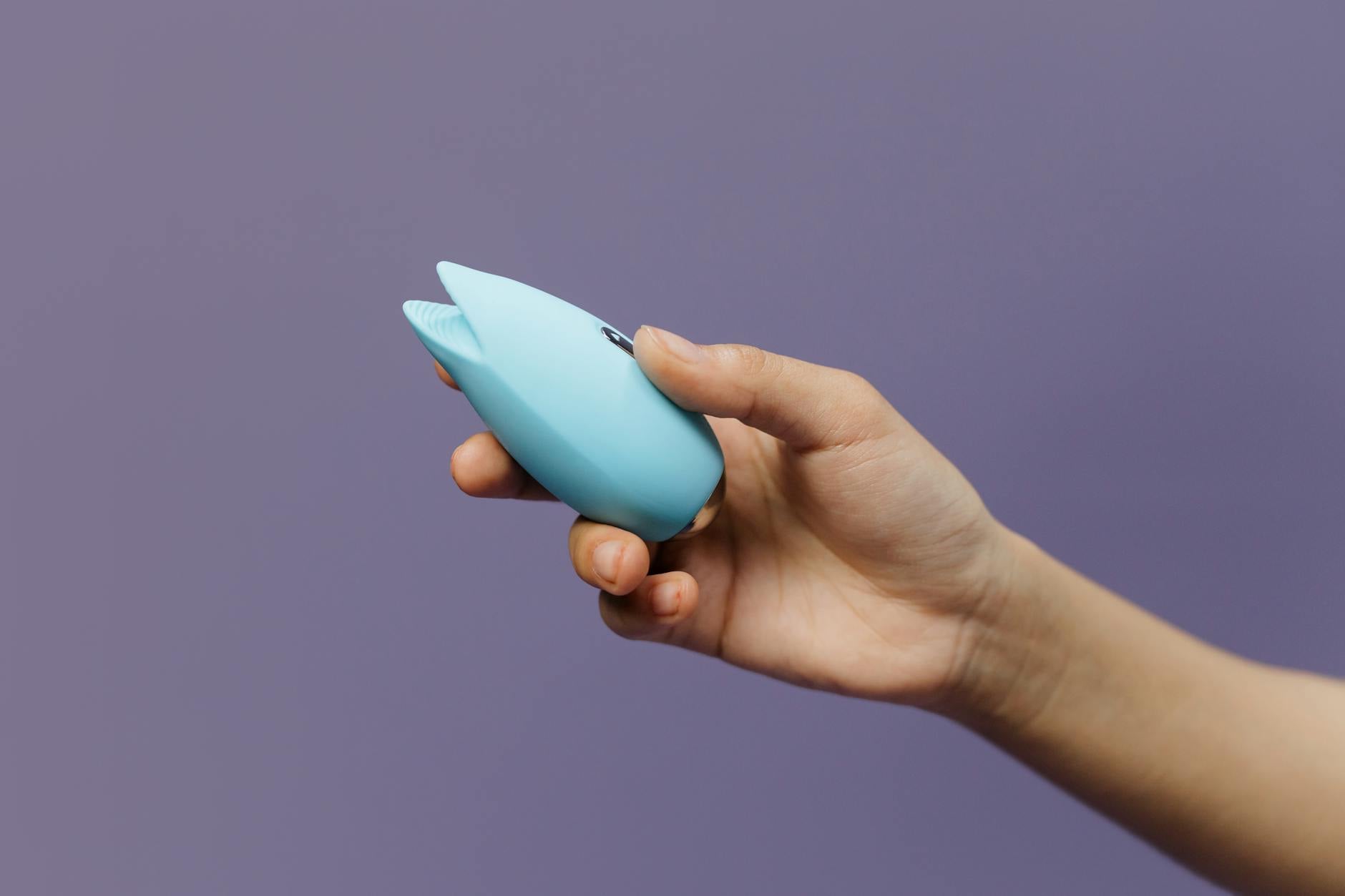
Lemon vibrators are shaped to fit naturally in your hand. The weight is balanced. The on/off button is easy to reach without shifting your grip. This sounds small, but it's the difference between a 15-minute session where you're present and a 15-minute session where you're focused on "this is hurting my wrist."
For partnered use, this matters too. If your partner is holding the toy, a good grip means steadier control and less fatigue. They can focus on what you're responding to instead of managing hand cramps.
Stimulation without the numbness problem
One of the biggest complaints I hear about intense vibrators is numbness. After 10 or 20 minutes of direct, high-intensity buzzing, sensation flattens. Your body stops responding the way it did at the start. This is real, it's physiological, and it's frustrating.
The suction-pulse design of a lemon clitoral vibrator avoids this faster than traditional vibration alone. Because you're getting rhythmic waves instead of constant buzz, your nerves don't fatigue as quickly. You can maintain pleasure longer without that "okay, I've lost the plot" feeling. And if you do need to take a break and come back, the sensation returns faster.
This is why people who've had trouble with traditional vibrators often find that lemon vibrators feel different and often better for maintaining long-term sensitivity.
Control for different body contexts
Sensitivity isn't static. Your body changes across your cycle, across seasons, across decades. On some days, direct pressure feels amazing. On other days, it feels like too much. A vibrator with real control options lets you meet your body where it is.
Someone dealing with pelvic pain, endometriosis, or recovering from injury might need gentler stimulation some days and more direct sensation other days. Having 5 or 6 settings and patterns means you can use the same toy for all of it, instead of needing multiple devices or just abandoning the idea altogether.
Similarly, if you're someone who feels lemon clitoral vibrators differently during different cycle phases, adjustable settings let you adapt without starting from scratch.
The mental piece
Honestly, control is partly psychological too. Knowing you can turn it down, change the pattern, or adjust the position gives you permission to relax. You're not white-knuckling it, waiting for overstimulation to hit. You're in charge.
That psychological safety matters. Pleasure requires a baseline of comfort. If you're anxious about intensity or pain or numbness, your nervous system stays partially activated in protection mode. With a tool designed for sensitivity and control, that anxious part of your brain can actually switch off.
When to use lower intensity intentionally
Not every session should be chasing the biggest orgasm. Sometimes the point is just feeling good, exploring, building arousal slowly. A vibrator that goes all the way to intensity 1 or 2 lets you do that. You're not stuck with "weak" or "strong." You have a full spectrum.
I often recommend starting at the lowest setting, even if you think you want more. Let your body tell you when it's ready for more intensity. Most people find they arrive at pleasure faster when they're not starting from maximum. It's like adjusting the water temperature instead of just running the shower full blast.
The partner communication angle
If you're using a lemon clitoral vibrator with a partner, the control piece helps communication too. Instead of "this is too much," you can actually adjust it together. They see you using a lower intensity and understand that's not a sign of disinterest. It's information. It's feedback. And it keeps the experience collaborative instead of someone feeling like they're "not doing it right."
Frequently asked questions
Can I use a lower intensity setting if I've used higher intensity before?
Absolutely. Your body is not "trained" to only enjoy one intensity. What works changes. Going back to a gentler setting is not regression. It's adaptation. If intensity 1 or 2 feels good today, that's what you use today.
Do lemon clitoral vibrators with more settings cost significantly more?
Not necessarily. A quality lemon vibrator with multiple patterns and intensities costs about the same as lower-control alternatives. You're not paying extra for the feature. You're just getting actual functionality.
What if I have a health condition that requires extra sensitivity?
If you're dealing with vulvodynia, pelvic floor dysfunction, or another condition affecting sensation or pain, talking to your healthcare provider about toy choice is worth it. They might recommend lower intensity, specific patterns, or even suggest trying a lemon clitoral vibrator specifically because of its gentler default range.
How do I know if a vibrator's settings are actually different or just marketing?
Test it. Most legitimate brands let you return items if the settings don't feel distinct. If you try a lemon vibrator and all five intensities feel nearly identical, that's information. But quality designs do have meaningful variation between levels.
Is it weird to mostly use the lowest settings?
Nope. Plenty of people camp on intensity 1 or 2. That's not a reflection of your body being "broken" or your sexuality being less intense. That's just what feels good. Your preferences are fine.
Can I transition to higher intensities later if I want to explore?
Yes. Exploring is always available. Some people start gentle and eventually prefer more intensity. Some people never do and that's equally valid. There's no timeline or "should" here.
The bottom line
Control isn't a luxury feature. It's how you get to actually know what you like. A lemon clitoral vibrator, built with sensitivity in mind and real adjustability in practice, lets you do that. You're not fighting against a tool that only knows one speed. You're working with something designed for nuance. And that changes everything.
If you've tried vibrators and felt like they weren't for you, or if sensitivity has been a barrier, the design matters more than you might think. The right tool, in the right hands, can reshape what's possible.