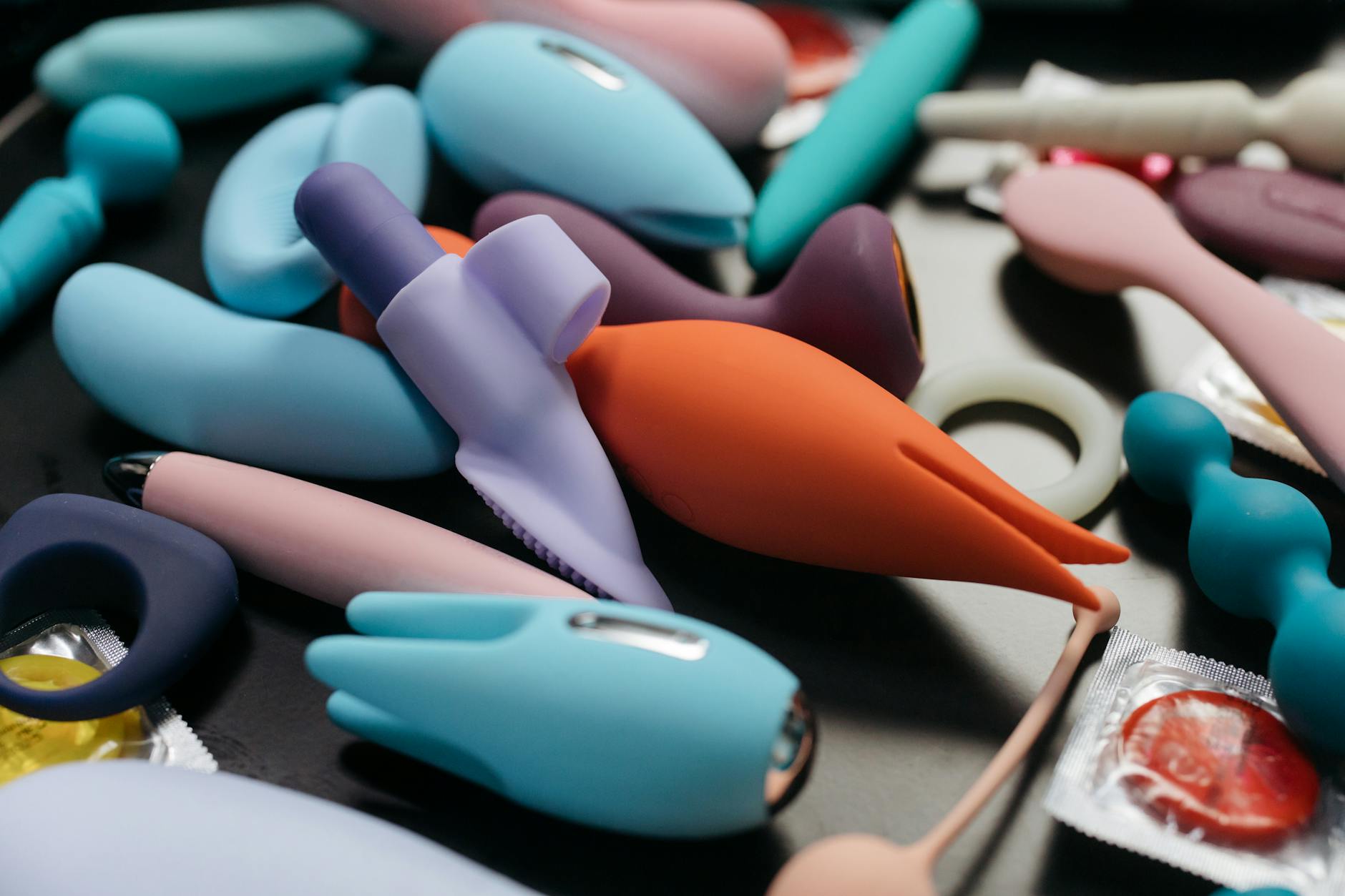
Here's the truth nobody tells you about hormonal shifts and pleasure
Your clitoral vibrator doesn't stop working when estrogen drops. Your body's relationship to it does. And honestly, that shift is worth understanding because the right tool and technique can actually make the experience richer, not diminished.
I work with couples navigating midlife transitions, and I can tell you the number one source of frustration isn't desire. It's the mismatch between what used to work and what feels right now. You haven't lost your capacity for pleasure. Your tissue sensitivity, arousal timeline, and the kind of stimulation that lands best have all changed. That's not a problem. That's information.
What happens to tissue when estrogen declines
When estrogen drops during perimenopause or after menopause, the vulva changes in specific ways. The vaginal tissue becomes thinner. The labia lose some fullness. Blood flow to the clitoris takes longer to increase. The entire pelvic floor gets less structural support. These aren't side effects. They're normal physiology.
Here's what matters for pleasure: the clitoris still contains roughly 8,000 nerve endings. Nothing has changed there. What has changed is the tissue surrounding it and the speed at which blood flows to it. That's why direct vibration, which worked beautifully at 35, can feel too harsh or numbing at 55. The tissue is more sensitive to pressure, not less sensitive to sensation.
That distinction changes everything about which toy works best and how you use it.
Why air-suction vibrators like lemon suckers feel different
A lemon clitoral vibrator uses gentle suction and pulsing air rather than direct vibration. Instead of pressing against tissue, it creates a pressure wave that moves through the clitoris. Think of it like the difference between a firm handshake and someone gently drawing you toward them.
For vulvas with less estrogen, this matters because suction stimulates without the same mechanical friction. The tissue doesn't experience repetitive pressure that can feel irritating or numb out sensation. Instead, you get a broader, deeper kind of stimulation that actually feels better on tissue that's thinner and more reactive.
Many of my clients report that lemon suckers like the Hello Nancy Lem feel more intense after menopause, not less. That intensity isn't painful. It's just different. It's the nervous system responding differently to a different kind of touch.
Building tolerance and finding your sweet spot
If you've just switched to a lemon sucker vibrator and it feels overwhelming, you're not alone. Here's how to adjust.
Start with the lowest setting. Most clitoral suction vibrators have 5 to 10 intensity levels. Begin at setting one or two and spend a few sessions there. Your nerve endings will start adapting, and what felt intense on day one will feel comfortable by day five. This isn't about toughening up. It's about neural adaptation, which is real and happens quickly.
Take your time with warm-up. Arousal takes longer when estrogen is lower. Budget 20 to 30 minutes of foreplay, manual stimulation, or other types of touch before you introduce the toy. The clitoris needs blood flow to respond fully. Rushing straight to the vibrator means you're working against your own physiology.
Position matters more now. Because tissue is more sensitive, the angle and placement of the toy makes a bigger difference. Some people find that holding the vibrator slightly off-center feels better than direct contact. Others prefer placing it over underwear or a thin fabric for a buffering layer. Experiment without judgment. What feels right is right.
How to communicate this shift with a partner
If you're using a lemon clitoral vibrator with a partner, the conversation is important. Your partner might think that needing a toy, or needing a different kind of toy, means something is wrong with them or with your connection. It doesn't.
Frame it factually. Say something like: "My body is responding differently to stimulation now. That's normal. I've found that this kind of toy feels amazing, and I'd love to explore it together." That shifts the conversation from problem-solving to curiosity. You're inviting them into something new, not defending against something lost.
Many couples find that switching to air-suction vibrators actually deepens intimacy because it removes the pressure to perform. You're not trying to reach an orgasm the old way. You're discovering a new way together. That exploration often feels more connected than the original pattern.
Let your partner be curious about how the toy works. Some people want to be in control of the toy. Others prefer to direct their partner. Neither is standard. Whatever feels good to you is the right answer.
The reality about sensation and pleasure post-menopause
Here's what the research actually shows: orgasm capacity doesn't decline after menopause. Orgasms often feel different, yes. They can be more centered, less full-body, or quicker to arrive. But they're often just as intense, sometimes more so.
A lot of people assume pleasure gets smaller after 50. Statistically, that's not what happens. What happens is that the kind of pleasure shifts. The foreplay that mattered less becomes essential. The toys that worked become optional. The speed and ease of the past slow down. And most people find that annoying at first, then deeply valuable once they stop fighting it.
Using the right tool, like a lemon sucker vibrator, actually accelerates that adaptation. You're not white-knuckling your way back to what used to work. You're leaning into what works now. That's not compromise. That's upgrading.
When to seek help if something feels wrong
If you're experiencing pain during use, or if stimulation triggers cramping or sharp sensations, stop and get evaluated. Genitourinary syndrome of menopause, or tissue changes from other health conditions, can make vibration feel uncomfortable. A menopause-informed gynecologist can often help with topical treatments in weeks.
If you've lost interest in pleasure entirely, that's worth exploring with someone. Hormonal shifts can affect desire, yes. But so can relationship stress, grief, medication, or just feeling out of touch with your body. None of those things require you to accept numbed pleasure as normal. They require attention.
For most people, though, adjusting your approach to lemon clitoral vibrators is the missing piece. You don't need a new partner, a new body, or new hormones. You need the information about how your current body responds and the permission to change your technique.
Common questions about lemon vibrators and hormonal shifts
Q: Does using a lemon clitoral vibrator after menopause feel different than before? A: Yes, usually in a good way. Air-suction vibrators often feel more comfortable and intense on tissue with less estrogen. The sensation is different because your nerve sensitivity is different, not because anything is broken.
Q: How long does it take to adjust to a new type of lemon sucker vibrator? A: Most people feel a noticeable difference within three to five uses. Neural adaptation is fast. If something still feels off after a week, you might need a different intensity level or a different toy design.
Q: Can I use a regular vibrator instead of a lemon sucker after menopause? A: You can, but many people find air-suction vibrators more comfortable. Because they don't rely on direct friction, they're gentler on thinner tissue. If a regular vibrator still works for you, that's fine. There's no rule.
Q: Is it normal for my lemon vibrator to feel intense after menopause when it was easy to use before? A: Completely normal. Your nerve sensitivity has actually increased, even though tissue thickness has decreased. This is why starting at a lower intensity level and building up matters so much.
Q: Should I feel embarrassed about needing a different toy now? A: Not even a little. Needing different tools as your body changes is just adaptation. You probably changed how you exercise, sleep, and eat as your body changed too. Pleasure is no different.
Q: Do lemon vibrators work better with a partner or alone? A: Both work, and differently. Alone, you get to discover your own response without any input. With a partner, you get to show them what feels good now. Neither is more valid.
The bottom line
Your clitoris hasn't gone anywhere. Your capacity for pleasure is still intact. What's changed is the physiology that surrounds that pleasure. Lemon clitoral vibrators, especially air-suction designs like the Hello Nancy Lem, are often better matched to that new physiology than the tools that worked before.
If you're navigating these shifts, start with curiosity instead of frustration. Lower intensity settings. Longer warm-up time. Patience with your own adaptation. Most people find that these small adjustments open up pleasure that feels newer and sometimes deeper than what came before.
Your body isn't betraying you. It's changing. And that change, with the right information and the right tool, can be genuinely good.
If you're struggling with pleasure, connection, or intimacy during this transition, I'm here to help. Reach out to chat about what's actually happening in your relationship and your body.