
Lemon Vibrators for Couples When One Partner Wants More Stimulation
Let's be real. One of you wants faster, more intense clitoral stimulation. The other isn't wired the same way. Maybe their arousal builds differently. Maybe their sensitivity threshold is higher. Maybe they're just fine with what you've been doing. None of these are problems. But the gap between what you each want can feel like one.
Here's the thing nobody says directly: the solution isn't compromise. Compromise is splitting the difference and both people feeling a little disappointed. The actual solution is a lemon vibrator.
Why this mismatch happens (and it's not what you think)
Most couples assume mismatched stimulation wants are about libido. One person has a "higher sex drive." Wrong frame. What's actually different is sensation threshold and the pathway to orgasm.
Some people need consistent, rhythmic pressure to build momentum. Some need variation and teasing. Some need direct, intense contact early. Some need a longer warm-up and can't come with direct intensity. None of these are better. They're just different nervous systems.
The partner who wants more stimulation often isn't pushing for "more sex." They're saying: "I need this specific type of input to reach the same place you do." Your fingers, your mouth, even regular vibrators sometimes don't deliver that intensity consistently enough.
A lemon clitoral vibrator changes the equation because it delivers what a human hand cannot: sustained, motorized suction and pulsation that doesn't fatigue, doesn't vary by mood or energy level, and doesn't require someone's arm to cramp.
The conversation you actually need to have
Don't lead with "I want to use a toy." Lead with curiosity about sensation.
Start like this: "I've noticed we seem to like different things when it comes to intensity. I don't think either of us is wrong. I just want us both to feel good. Can we talk about what works for you?"
Listen for specifics. "I like it slower" is different from "I don't like direct touching." "I need more intensity" is different from "I come faster with vibration." Once you both use actual sensation language, the toy conversation feels less like a Band-Aid and more like a genuine solution.
Then: "I've been thinking about trying a lemon vibrator together. Not because anything is wrong with what we do now, but because I'd like to try something that might make this part feel easier for us both." That's it. No apologies. No framing it as fixing a problem with them.
How to actually use it together (without weirdness)
First use should be low pressure. You're testing it out, not performing. Here's the order that works:
Step 1: Explore alone first. Before you use it together, whoever is going to experience the direct stimulation should spend 10-15 minutes solo with it. Settings. Pressure. Speed. Whether you like it all over the clitoris or just on the side. This removes the "is this working?" performance anxiety from the partner experience.
Step 2: Introduce it during foreplay, not as the main event. Use a lemon vibrator the same way you'd use your hand early on, when you're kissing and building arousal. This signals "this is just part of what we do," not "we're now a toy-dependent couple." The other partner can touch you elsewhere, kiss you, do their thing while the vibrator does its job.
Step 3: Maintain connection. The biggest mistake couples make is one person disappearing into the vibrator experience while the other watches. You're still together. Make eye contact. Your partner can be inside you or stimulating you elsewhere. The lemon vibrator is enhancing, not replacing them.
Step 4: Use it at your pace. If you usually come in 8 minutes, don't expect the vibrator to change that. Some people climax faster with it. Some take longer because the intensity is so different they need mental recalibration. There's no "right" timeline.
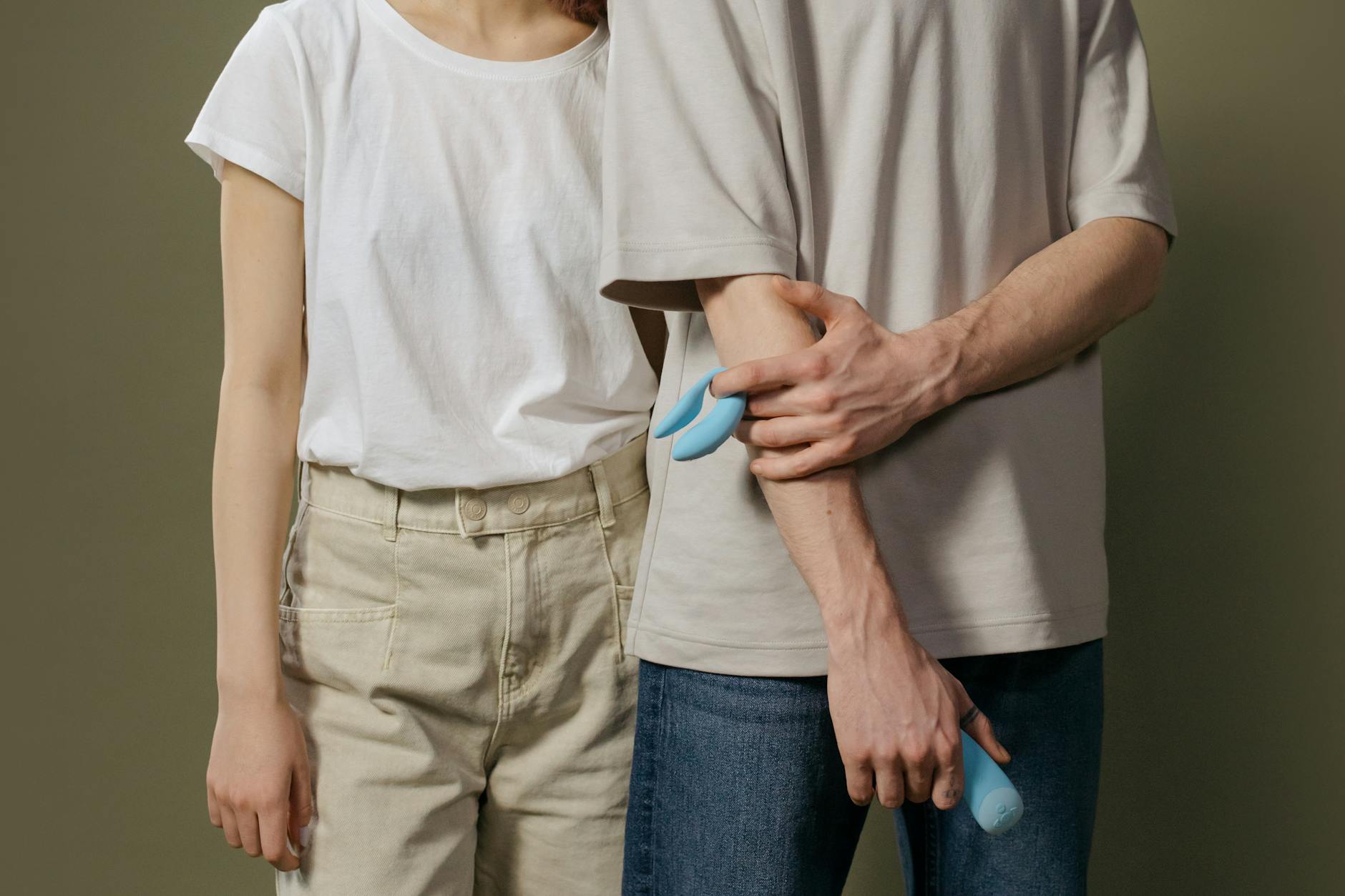
Photo by cottonbro studio on Pexels
What happens when intensity finally feels right
Here's what I see in couples who solve this: the relief is massive. And it's not just physical. It's emotional.
When one partner's needs have been chronically unmet, resentment builds quietly. They start feeling like their body is asking for something "too much." The other partner starts feeling inadequate. Nobody says this out loud. But it's there.
A lemon clitoral vibrator doesn't fix the relationship. But it removes the object of the silent blame. You're not failing your partner. Your partner's body is just wired for a type of stimulation that humans can't deliver reliably. That's not a flaw. That's just biology.
Once you're both actually satisfied, the energy in the bedroom changes. There's less tension. More play. More willingness to try other things because the baseline pressure is gone.
The pattern shift that matters
When you use a lemon vibrator as a couple, you're also building a skill: asking for what you need without shame, and responding to your partner's asks without defensiveness.
That transfers everywhere. You start asking for intensity in other contexts. Different positions. Different timing. Different environments. The vibrator becomes a gateway to a more honest sexual conversation, not the conversation itself.
Many couples I work with report that introducing a lemon vibrator actually made their sex life more connected, not less, because finally both people were experiencing pleasure at a similar intensity level. Mismatched sensation needs create invisible distance. When they're addressed, that distance closes.
Practical setup tips
Water-based lubricant helps a lemon vibrator work better, especially if there's any thickness difference in tissue. It's not strictly necessary, but it reduces friction and increases sensation.
Start on the lower settings. Pattern 1 or 2 on a device like the Lem. You can always turn it up. You can't turn down a partner's flinch.
If direct contact feels overwhelming, angle the vibrator slightly or use it through underwear first. Sensation transfers through fabric. This gives your nervous system time to adjust.
Keep it nearby afterward but don't make a big thing of it. Just normalize it as equipment, like lube or condoms. The less ceremonial it becomes, the more natural it feels.
When to add it to partnered sex
Wait until you've used it a few times during foreplay before bringing it into penetrative sex. You want to know how your body responds first.
When you do: during penetration, a lemon vibrator on the clitoris works alongside your partner inside you. This is where couples often experience the most intense shared sensation. The person being penetrated gets internal and external stimulation. The penetrating partner often feels the vibrations indirectly, which many people find incredibly hot.
Timing matters. Don't start at maximum intensity. Build into it the same way you'd build arousal without a toy.
Some people like it throughout. Some want it only at the end. Some want their partner to control it, some want to control it themselves. None of these are wrong. You're learning your own setup.
The conversation after
Don't assume the experience went the way you think it did. Ask. "How did that feel?" "Was the intensity right?" "Do you want to try it again, or try something different?"
Feedback is information, not criticism. If your partner says "that was weird," it doesn't mean the vibrator was a mistake. It means you have data to adjust with next time.
Some couples need a few tries. Some click immediately. Both are normal. The goal isn't immediate perfection. It's building a sexual practice that works for both nervous systems.
FAQ: Lemon Vibrators for Couples With Intensity Mismatches
Will using a lemon vibrator make my partner dependent on it?
No. Your partner's clitoris doesn't "get used to" a vibrator the way your muscles build tolerance to a workout. Some people experience temporary desensitization if they use the same vibrator at the same intensity multiple times a week for months, but that's rare and reversible by taking a break. What actually happens is your partner discovers what they like, and that knowledge helps you both understand pleasure better. Many couples alternate between vibrators and hands depending on the day. Think of it as adding a tool to your toolkit, not replacing the original tools.
What if I want more intensity but my partner doesn't want to use toys?
That's a conversation about more than the vibrator. Your partner might feel insecure, think toys are "cheating," worry they're being replaced, or genuinely just not enjoy vibration. Start there, not with the toy. "I've noticed we have different stimulation needs. I'm not asking you to do something you don't like. I'm wondering if we can find a way that works for both of us." Sometimes that's a toy. Sometimes it's position changes, longer foreplay, different timing. Sometimes it's you using a lemon vibrator during solo sessions and your partner supporting that. The point is you're problem-solving together, not around each other.
Can we use a lemon vibrator if my partner has a penis?
Absolutely. A lemon clitoral vibrator works on any vulva, regardless of what else is happening. Your partner can use it on you during penetration, foreplay, or any other time. Some penises are sensitive to vibration indirectly, which some people find pleasurable. Some people find it distracting. You'll figure out what works for your bodies. The vibrator isn't gendered. Your pleasure is what matters.
How do I bring this up without sounding like I'm complaining about their touch?
You're not asking them to change what they do. You're asking to add something. Frame it as curiosity and experimentation, not critique. "I've been reading about clitoral suction vibrators and I'm curious what that feels like. Do you want to explore it together?" or "I noticed my sensitivity is different depending on the day, and I'm wondering if we could try some different things." Lead with yourself, not with what they're doing wrong. Because they're not doing anything wrong. Your bodies are just asking for different inputs.
What if we don't orgasm with it the first time?
That's not failure. New sensations require mental adjustment. Your brain is processing a completely different input than what it's used to. Give it 2-3 times before you decide whether it's right for you. Some people need their nervous system to acclimate. Some people need the emotional pressure to lower. Some people discover they actually prefer a different type of toy. That's all useful information. The goal isn't to climax with the vibrator. The goal is to close the intensity gap between what you each need to feel satisfied.
Can I use a lemon vibrator if I'm on medication that affects arousal?
Yes. A lemon vibrator can actually help if medication is making climax harder to reach, because the intensity and consistency bypass some of the neurological dampening that happens with antidepressants or other drugs. Some people find that a toy gives them the external input boost they need to reach orgasm when medication makes natural arousal slower. That said, medication interactions are individual. If you're concerned about side effects or interactions, mention it to the prescribing doctor. They've heard these questions. Many medications affect sexual response, and providers want to help you manage that.
What changes when you stop hiding the mismatch
Mismatched intensity needs don't go away. But they stop being a source of resentment when you address them directly. A lemon vibrator, or any clitoral suction toy, is just the tool. The real shift is the conversation.
You're saying: "Your body is different from mine, and that's not a problem to solve. It's information to work with." You're building a sexual practice that honors both of you instead of asking one person to perform at a level their body can't sustain, and the other to accept less than they need.
That's not compromise. That's teamwork. And everything gets better from there.
If you're ready to explore more about building intimacy across differences, we can help you find what works. Reach out to chat about what you're navigating.
References & Further Reading
- Meston, C. M., & Frohlich, P. F. (2000). The neurobiology of sexual function. Archives of General Psychiatry, 57(11), 1012–1030.
- Komisaruk, B. R., & Whipple, B. (2005). Functional MRI of the brain during orgasm in women with complete spinal cord injury. Progress in Brain Research, 152, 127–139.
- King, R., Belsky, J., Mah, K., & Binik, Y. M. (2011). Are there different types of female orgasm? The Journal of Sexual Medicine, 8(10), 2954–2968.
- Gillan, C. M., & Whelan, R. (2017). What big data can tell us about the nature of obsessive-compulsive disorder. Trends in Cognitive Sciences, 21(6), 405–407.