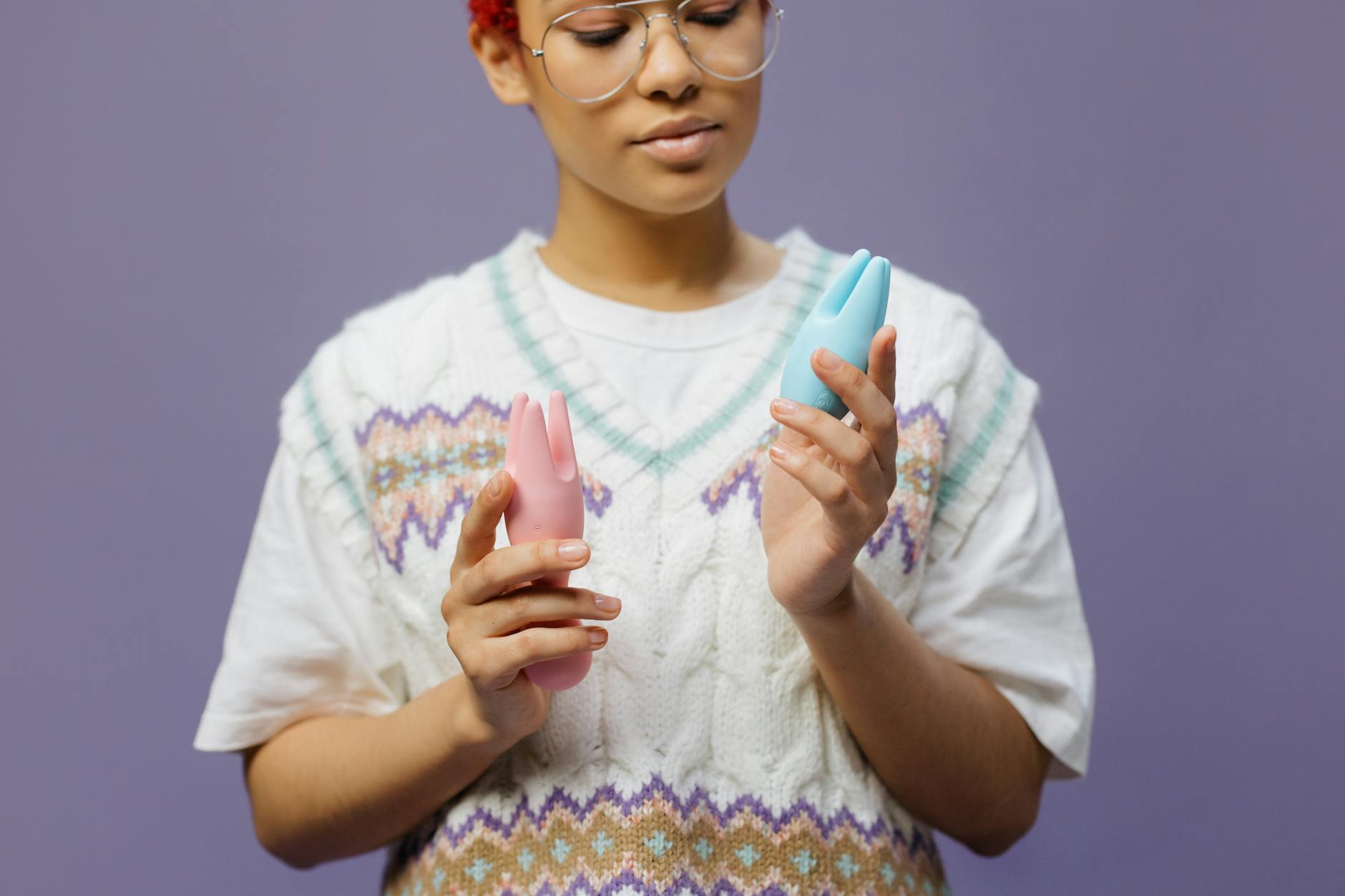
Let's be real. You've probably used a lemon clitoral vibrator and then immediately wanted to go again. Or you've wondered if you should. Or you've felt physically like you couldn't, even though mentally you wanted to, and assumed something was wrong.
None of those responses are wrong. But understanding what's actually happening in your body during "recovery" gives you back control and clears up a lot of unnecessary confusion.
What recovery actually is
Recovery isn't a punishment. It's not a sign that your vibrator is too strong or that you're not in shape. Recovery is what your nervous system does after a big release.
Here's the mechanics. When you orgasm, your parasympathetic nervous system floods with activation. Heart rate spikes, muscles contract, blood flow concentrates in your pelvic region. Then, after the orgasm ends, your body needs to recalibrate. Blood pressure drops. Muscle tension releases. Your nervous system literally switches gears from sympathetic (aroused, active) back to parasympathetic (calm, receptive).
That switch takes time. How much time depends on your body, your age, your stress level, and what you ate that morning. For some people, five minutes is enough. For others, twenty. For still others, it's a day or two before the desire returns in a meaningful way.
All of those are completely normal.
The refractory period isn't a myth
You've probably heard the term "refractory period" in connection with penis owners. People with vulvas have them too, though we talked about it way less (which is a whole other conversation about whose pleasure got research funding, but I digress).
Your refractory period is the window after orgasm when additional stimulation either feels dull, numb, or actively uncomfortable. It exists because your nerve endings are temporarily fatigued. The same receptors that were firing intensely during orgasm need a moment to reset their baseline sensitivity.
With a lemon vibrator like the Lem, which uses air-suction rather than traditional vibration, you might notice the refractory period feels different than it does with other toys. Suction works on a different neurological pathway than friction-based vibration, which means some people find they can return to play faster with a lemon clitoral vibrator. Others find they need longer. Pay attention to your own body rather than assuming the toy determines your timeline.
Physical sensitivity and when it returns
After orgasm, your clitoral tissue literally swells from increased blood flow. That swelling makes the area more sensitive to pressure. For some people, that heightened sensitivity is enjoyable. For many, it feels too intense, almost electric in a way that's uncomfortable.
This sensitivity typically peaks in the first 5-10 minutes after orgasm, then gradually decreases. Your tissue doesn't truly desensitize in a permanent way. Instead, your nervous system stops interpreting the stimulation as "arousing" and starts interpreting it as "overstimulating." The feeling isn't wrong or broken. It's your body saying "I need a break."
How long that takes varies wildly. Stress, hydration, caffeine, cycle phase (if you menstruate), and whether you've eaten all play a role. After an intense orgasm, you might need 15-30 minutes before touch feels good again. After a gentler one, maybe five minutes.
Multi-orgasm protocol with a lemon clitoral vibrator
If you want to have multiple orgasms in one session, here's what helps.
First, take a genuine pause between rounds. Don't push through numbness just because you want to. That's not expansion, that's desensitization, and it usually makes the third and fourth orgasms harder to reach, not easier.
Second, lower the intensity during the recovery window. If you were at pattern 5 on the Lem, drop back to pattern 2 or 3 as you approach orgasm. This gives your nervous system a gentler re-entry point rather than a jarring restart. Many people find that starting with lower intensity on round two actually leads to more intense orgasms overall, because your body's refractory window is shorter when you haven't completely exhausted your arousal circuitry.
Third, change what you're thinking about. Your arousal isn't purely physical. If you're lying there thinking "okay, let's do this again," your parasympathetic nervous system picks up on that military mindset. Instead, let yourself come back into actual desire. Watch your partner. Read something that turns you on. Let your mind wander into fantasy. Your body will follow.
Fourth, stay present with sensation rather than chasing the destination. The fastest way to flatten a second or third orgasm is to white-knuckle your way toward it. The slower path, which often paradoxically gets there faster, is to notice what feels good and let that build at its own pace.
Recovery between sessions (not just rounds)
This is different from recovery between back-to-back orgasms. This is the longer timeline. How long before you want to use your lemon vibrator again at all.
Some people have desire return within hours. Some within days. Some need a week or more, especially if the previous session was particularly intense or if they're navigating hormonal shifts, stress, or relationship conflict.
If you share a bed with a partner, don't assume their recovery timeline matches yours. One of the easiest mistakes couples make is comparing their refractory periods and concluding something's wrong with whoever takes longer. Different nervous systems, different bodies, different hormonal profiles. It's not a mismatch, it's variation.
If you're noticing that your desire isn't returning on a timeline that feels normal for you, that's worth paying attention to. Persistent loss of desire can signal stress, medication side effects, relationship strain, or sometimes hormonal changes. But the recovery window itself, the simple fact that you need a break before your next session, that's just biology.
Signs you're pushing too hard
If numbness persists beyond 30-45 minutes after orgasm, that's information. It usually means either the intensity was higher than your body was ready for, or you were in back-to-back sessions without adequate breaks.
If soreness appears the next day, especially tenderness in the vulva or lower abdomen, you've likely overused the toy or pushed through the refractory window too aggressively. That soreness is your body saying "too much, too fast." Ease up. Use lower intensity. Take longer breaks.
If desire completely disappears for weeks, that's different. That's worth exploring with a doctor or therapist, not something to push through with more use of your lemon clitoral vibrator.
The difference is this: a recovery window that lasts an hour or a day is normal physiology. Persistent numbness or disappearing desire is your body asking for attention.
Building tolerance without burning out
Some people use their lemon vibrator three times a week. Others use it three times a day. Both can be fine, as long as you're listening to your body's signals rather than ignoring them.
Tolerance is real. The more you use a device, the more familiar your nervous system becomes with it, which means it can take higher intensity or longer sessions to reach the same peak. That's not a problem. It just means you can adjust intensity, duration, or technique to keep things interesting.
Where people get stuck is pushing through fatigue to maintain the same sensation level. That's backward. Instead, vary your approach. Use your lemon sucker at lower intensity one day, higher intensity another. Use it during different times of day. Use it with different thoughts or fantasies. Use it with a partner present in a different way than when you're solo.
Variation is the actual antidote to tolerance, not escalation.
When recovery signals are trying to tell you something
Sometimes a long recovery window or disappearing desire isn't about the toy. It's about relationship dynamics, stress, medication, or hormonal changes.
If you're in a relationship where you feel pressure to be available sexually before you genuinely want to be, your nervous system will slow down. That's not broken. That's your body protecting you. The fix isn't a stronger toy. It's addressing the dynamic.
If you're stressed, your refractory period lengthens. If you're not sleeping, it lengthens. If you're on a medication that affects dopamine or blood flow, recovery looks different. None of these are signs that you should abandon your lemon vibrator. They're signs that your whole life is affecting your sexuality, which is exactly how it should work.
The bottom line
Your recovery time is yours. It's not too long. It's not too short. It's not a problem to solve. It's just the rhythm of your body, and listening to it, rather than fighting it, is where your power actually lives.
Frequently asked questions
How soon after using a lemon vibrator can I have sex with my partner?
There's no rule. If you're interested, you can go immediately. Your partner's touch and involvement might actually feel different or potentially better right after orgasm. Or you might need to wait. Check in with yourself and your partner about what actually feels good rather than assuming there's a right timeline.
Is it bad to use a lemon clitoral vibrator every day?
Not inherently. The question is whether you actually want to, and whether your body feels good afterward. If you're using it daily and feeling energized and satisfied, that's fine. If you're using it daily and noticing numbness, soreness, or that your desire has flatlined, ease back. Listen to sensation, not rules.
Why does my lemon sucker feel less intense after I've orgasmed?
Your nerve endings are temporarily fatigued, and your tissue sensitivity has shifted. This is completely normal and usually lasts 5-30 minutes. It's not the toy losing power. It's your nervous system recalibrating.
Can I build up a "tolerance" to my lemon vibrator and need a stronger one?
Yes, but tolerance doesn't always mean you need a different toy. It often just means adjusting intensity, duration, or technique. Try using a lower pattern for longer, or approaching it in a new context. If you do want more intensity, check the Hello Nancy lemon vibrator options, which range from entry-level to more powerful models.
What if I don't feel any desire to use my lemon vibrator anymore?
That's worth exploring. Is it stress, relationship shift, or hormonal change? Is it that you've gotten what you needed from it and you're just in a different phase? Or is it genuine loss of desire that concerns you? If it's the last one, talking to a doctor or therapist makes sense. Pleasure matters, and so does understanding what's underneath a shift.
How do I know if my recovery time is normal?
There's no universal normal. Your normal is whatever feels good for your body, without pain or excessive numbness. If your recovery timeline has suddenly changed, or if it's significantly longer or shorter than it used to be, that's worth noticing. But slight variation week to week is completely ordinary.