
Here's what nobody tells you about birth control and orgasms
Birth control is wildly effective at preventing pregnancy. It's often terrible at explaining why your orgasms feel like they've moved to a different timezone. You start a new pill, patch, or ring, and suddenly arousal takes twice as long to build. Or it builds fine, but the final peak feels distant, muted, like you're reaching for something just out of reach. That's not you. That's hormones doing their job.
The frustration runs deeper than physical changes. You're used to your own body's rhythm. You know the pattern. Then suddenly you're a stranger to yourself, and nobody warned you this was coming.
Why birth control delays orgasm (the actual mechanism)
Hormonal contraceptives—pills, patches, rings, implants—suppress the hormonal surge that typically triggers ovulation. That's the point. But estrogen and progestin also affect neurotransmitters in your brain and the blood flow to your genitals. Specifically:
Serotonin gets higher. Some birth control formulations boost serotonin, which can feel calming and anxious-reducing (great for mood). But serotonin is a natural orgasm dampener. It's why SSRIs—antidepressants that increase serotonin—often come with delayed orgasm as a side effect.
Blood flow changes. Estrogen affects how easily blood reaches your clitoris and vulva. Less blood flow means slower arousal and a gentler sensation overall. It's not nothing; it's a real physical shift.
Dopamine sensitivity shifts. Your nervous system becomes slightly less responsive to the dopamine spike that drives toward climax. The pleasure is still there. The urgency to reach it just softens.
None of this means your body is broken. It means your body is adapting to a chemical environment it's never experienced before. That takes time. And the right tools help.
What doesn't change (and this matters)
Your capacity for pleasure is intact. Your clitoral nerve density hasn't changed. Your brain's reward pathways still work. You're not asexual. You're not losing desire permanently. What's changed is the timeline and the intensity of the sensation. That's a different problem than losing the ability altogether.
Many people find that once they stop treating delayed orgasm as a failure and start treating it as a different route to the same destination, the frustration eases. You're not broken. You're just operating with a new parameter.
How a lemon clitoral vibrator changes the equation
A lemon vibrator—especially one that uses air-suction technology like the Lem—works differently than traditional vibrators. Instead of relying on your body to generate the friction and blood flow on its own, suction stimulates nerves directly and intensifies sensation without requiring your nervous system to do all the heavy lifting.
For someone whose arousal has been muted by birth control, this matters. You're not fighting against your body's reduced responsiveness. You're giving your nervous system exactly the input it needs to build pleasure faster.
The Lem's range of settings also means you can start gently and build. When arousal takes longer, patience becomes a feature, not a bug. You have time to explore different patterns and intensities without feeling like you're chasing something that's slipping away.
The practical reset: how to actually use one
Start low, even if you think you won't. Birth control hasn't made your clitoris numb; it's made it less eager. Low intensity on a lemon clitoral vibrator still delivers significant sensation because suction works differently than vibration. Begin on pattern 1 or 2. You can always turn it up. You can't unsensitize yourself if you blast high intensity right away.
Extend foreplay by design. Don't treat longer arousal time as something to rush through. Set aside 20-30 minutes instead of 10. Use the first half to explore sensation without any goal. This matters more now than it did before, because your dopamine system isn't pushing you toward the finish line as hard. You're not fighting biology; you're working with it.
Find your new pattern. Birth control changes which rhythms work for you. Some people discover that steady, consistent patterns feel better than the varied rhythm that used to work. Others find that slower oscillations build better than rapid ones. A lemon sucker gives you the flexibility to test these without feeling pressured to perform. Alone or with a partner, you're the scientist here.
Rhythm matters more than intensity now. With delayed arousal, hitting the right cadence is often more important than pure sensation strength. Experiment with staying on one pattern for 2-3 minutes before switching. You might discover that a medium-intensity steady rhythm gets you there faster than chasing higher intensity.
The partnership conversation (if you have one)
If you're with someone, this is a good place to separate logistics from feelings. Your arousal delay isn't about them. It's not about attraction. It's not about the relationship. It's about how your nervous system is responding to a chemical change. That clarity helps both of you stop interpreting the change as rejection.
Using a lemon vibrator together can actually help this conversation feel less clinical. You're not saying "I can't come anymore." You're saying "Let's try this, and let's take our time with it." That's collaborative. That's intimate.
When to consider a different birth control method
If orgasm delay is severe enough that it's genuinely affecting your quality of life or your relationship satisfaction, it's worth talking to your gynecologist. Not all hormonal contraceptives affect arousal equally. Some people switch from a combined pill to a progestin-only option and notice immediate improvement. Others find that the patch works better than the pill.
The conversation with your doctor matters because there are real alternatives. You're not stuck. If your current method is making pleasure consistently difficult, that's a legitimate reason to explore different options.
The timeline is real but not permanent
Most people find that their arousal system adapts somewhere between 3-6 months on a new birth control method. That doesn't mean you have to white-knuckle through 6 months of frustration. It means that using a tool like a lemon clitoral vibrator during this adjustment period gives you access to pleasure while your body settles. You're not waiting for normal to come back. You're working with what you have right now.
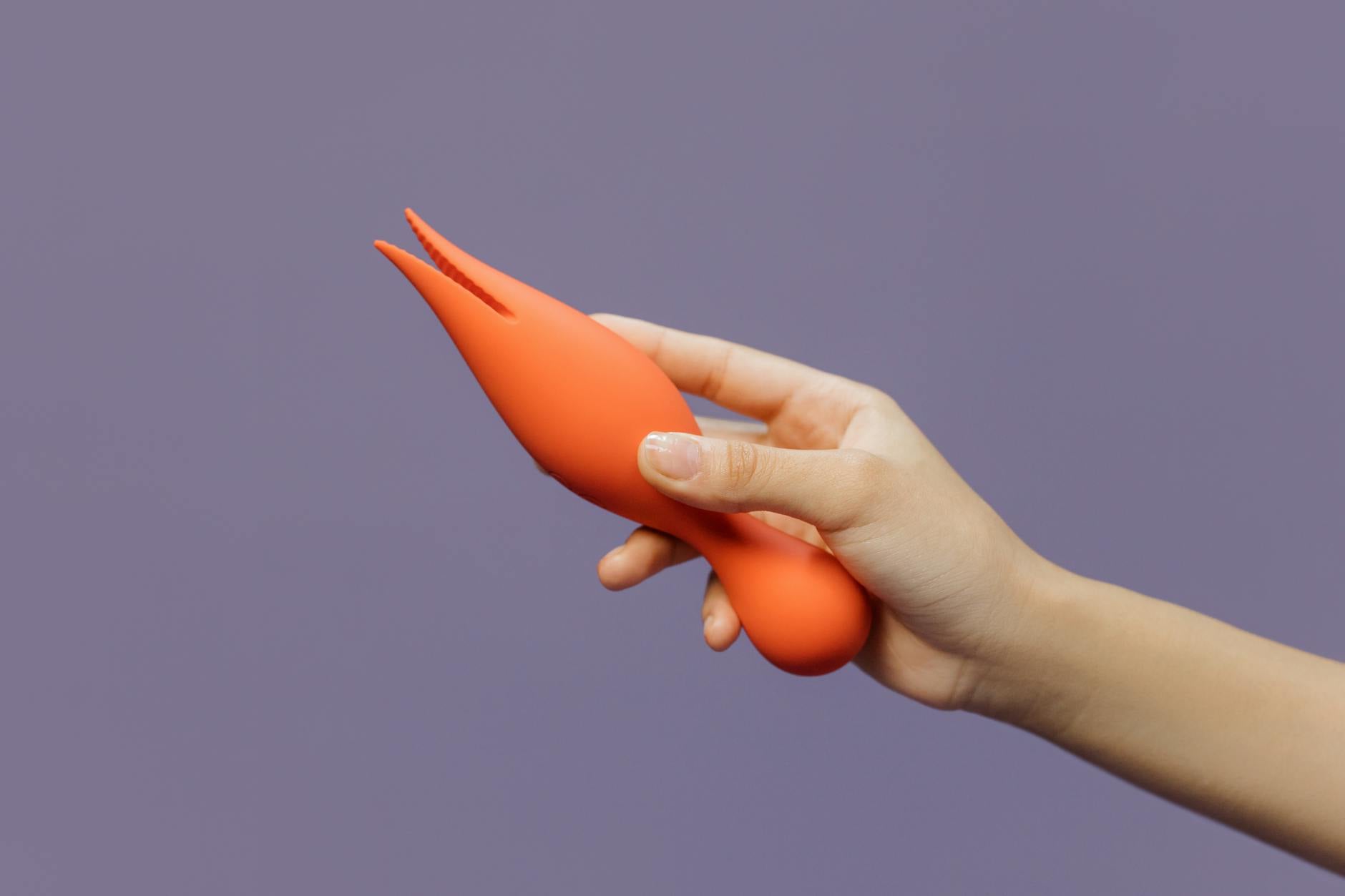
Photo by cottonbro studio on Pexels
Real expectations: what a lemon vibrator can and can't do
A lemon clitoral vibrator can help you reach orgasm faster than you might on your own right now. It can intensify sensation. It can help you find the patterns that work best with your current arousal system. What it can't do is force your body to respond like it did before birth control. And honestly? That expectation is the real problem.
The goal isn't to get back to where you were. The goal is to find pleasure in where you are now. That's actually a much easier target to hit once you stop treating your current body as a broken version of your previous one.
Many people find that once they adjust to birth control and give themselves permission to take longer, their orgasms feel different—sometimes quieter, sometimes more diffuse, sometimes actually more satisfying because they're not fighting against their own physiology. A lemon vibrator gets you to that place faster. The pleasure on the other side isn't lesser. It's just different.
FAQs
How long does it usually take for birth control to stop affecting orgasm?
Most people see some improvement within 3-6 months as their nervous system adapts. However, that timeline varies wildly based on the type of contraceptive, your individual neurobiology, and how much stress is layered on top of the physical change. If you're frustrated about the delay, that frustration can actually make things slower. A tool like a lemon vibrator helps because it takes some of the pressure off your body to perform and puts you back in charge.
Can I use a lemon vibrator if I'm also on antidepressants?
Yes, absolutely. In fact, many people on SSRIs (which also delay orgasm) use lemon clitoral vibrators specifically because suction-based stimulation can help compensate for the reduced arousal response. You're combining two things that both slow your system down, but a lemon vibrator's intensity can help counteract that. Start low and adjust based on what feels good. If you're unsure about interactions or contraindications, your prescriber is your best resource.
Will my orgasms ever feel as intense as they did before birth control?
Maybe. Maybe not. That depends on your specific neurochemistry and how your body adapts over time. But here's what I've observed clinically: people often describe post-adjustment orgasms as different but equally satisfying, just for different reasons. They arrive less urgently and sometimes feel more localized. Some people find that genuinely preferable once they stop comparing and just experience. A lemon vibrator can help you get there without the frustration of feeling broken in the meantime.
Is it normal to need a vibrator when I never needed one before?
Completely normal. Birth control changes your baseline arousal response. That doesn't mean you're dependent on the tool. It means you're adapting to a new reality efficiently. Once your body fully adjusts to the hormonal shift (usually 3-6 months), you might find you need it less. Or you might discover you actually like it more. Both are fine. Tools exist to make pleasure accessible, not to prove you're still "natural" at sex.
Should I tell my partner I'm using a lemon vibrator because of birth control changes?
If you're in a partnered sexual relationship, yes. Keep it straightforward: "My birth control is affecting my arousal, and I'd like to try using a lemon vibrator with you." That's not a criticism of your partner. That's information. It shifts the conversation from "something's wrong with me" to "let's adapt together." Most partners appreciate the clarity and the solution over watching someone suffer in silence.
Can I still orgasm without a vibrator if I'm on birth control?
Yes. It might just take longer or feel different than it did before. But you haven't lost the capacity. Using a lemon vibrator during the adjustment period doesn't mean you'll become dependent on it. It means you're giving yourself access to pleasure while your nervous system recalibrates. Think of it as temporary scaffolding, not a permanent crutch.
The bigger picture
Birth control affects more than pregnancy prevention. It affects your brain chemistry, your vascular system, your nervous system's responsiveness. That's not a flaw in the contraceptive. That's how it works. The problem is that nobody—not your prescriber, not health class, not the internet—explains what to actually do when those changes land in your life and in your bed.
A lemon clitoral vibrator isn't a fix for birth control side effects. It's a way to work with your body's new reality instead of against it. You're not broken. Your timeline just shifted. Once you accept that, pleasure becomes accessible again. It looks different. It tastes different. But it's there.
If you're struggling with arousal changes and need support navigating them, reach out to our team. We're here to help you find what works for your body right now.