The thing no one talks about
Body image isn't just something you feel when you're naked in front of someone else. It's weirdly loud during solo time too. You're alone, the stakes should be zero, and yet somehow there's a voice narrating your thighs or your stomach or the way your body moves. That voice is a pleasure killer, and it's worth naming.
Here's what I've learned from decades of working with couples and individuals: the fastest way to kill arousal isn't rejection from a partner. It's self-rejection. And self-rejection sneaks in when you're alone because there's nowhere to hide from yourself.
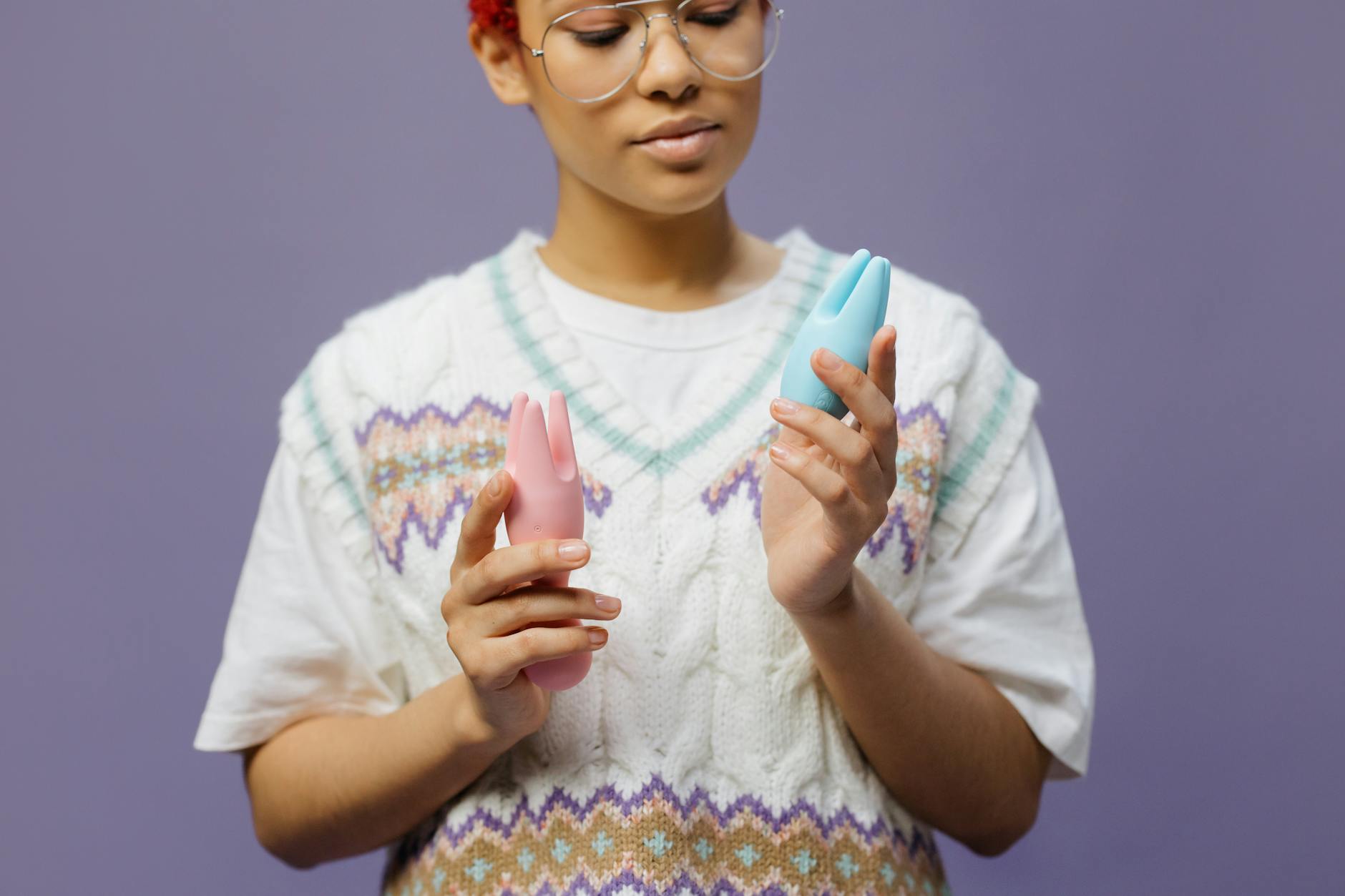
The good news is that a tool like the Lem, a clitoral vibrator designed specifically for external stimulation, can actually help you bypass that critic and drop straight into sensation. Not because the vibrator is magic, but because it gives your brain something to focus on other than what your body looks like.
Why body awareness hijacks arousal
Your brain can't do two things at once with equal intensity. It can observe or it can feel, but not both at peak capacity. When you're self-conscious, you're in observation mode. You're watching yourself from the outside. Arousal requires you to be fully inside your body.
When self-consciousness shows up during solo pleasure, it's usually because:
You've internalized someone else's gaze. A partner who made a comment, or didn't make a comment when you wanted them to. A parent's voice about your body. Media images. The cumulative message that your body is something to be looked at and judged, not something to be inhabited and enjoyed.
You're performing for an imaginary audience. Some of this is neurological (the default mode network, the part of your brain that narrates your life to an imaginary social audience, lights up for a lot of people during arousal). Some of it is learned.
Pleasure feels unsafe. If pleasure has ever been met with judgment or shame, your nervous system might treat it as a threat. Self-consciousness is actually a protection mechanism. It's your body saying, "I don't feel safe letting go here."
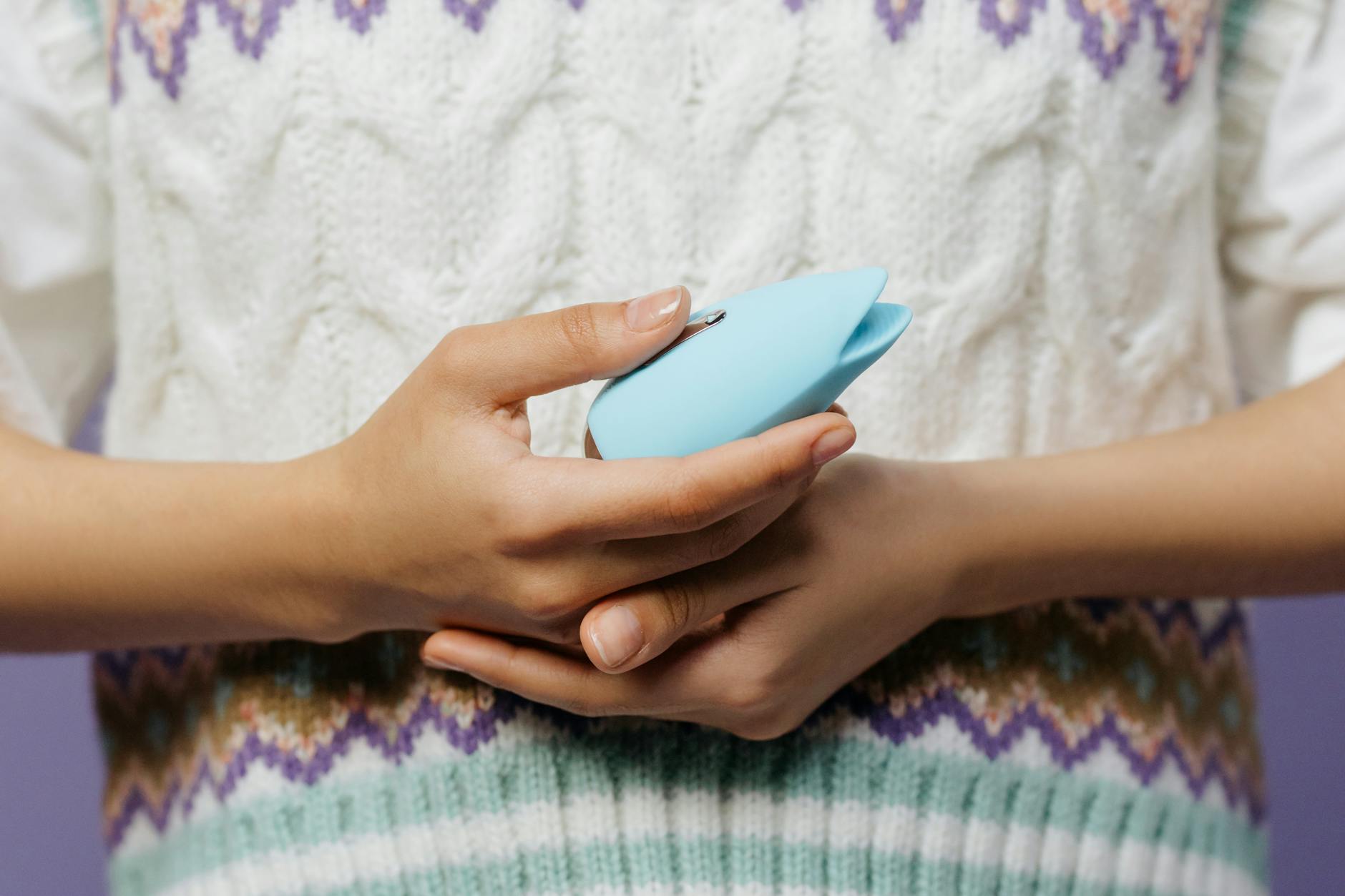 Photo by cottonbro studio on Pexels
How a clitoral vibrator resets the focus
The Lem and other lemon vibrators work differently than your hand or your imagination. Your hand triggers observation mode because you're aware of your hand moving. A lemon clitoral vibrator bypasses that. The sensation is concentrated, specific, and external in a way that pulls your attention into the feeling itself rather than the body receiving it.
This is neuroscience, not metaphor. When you use a vibrator, the stimulation pattern is repetitive and intense enough that your brain's sensory processing centers light up more than your default mode network. You're harder to distract. The critic gets quieter because your attention is literally elsewhere.
Second, a vibrator removes the performance element from solo play. Your hand might be tied to old patterns of moving a certain way, holding yourself a certain way, because that's what you learned from partners or porn. A vibrator has one job: deliver sensation. You're not performing with it. You're just receiving.
The practical setup that removes self-consciousness
Three changes make a real difference:
1. Lights and angles matter more than you think. If you're in a bright room looking at yourself in a mirror, you're staying in observer mode. Dim the lights. Close your eyes. If you keep your eyes open, look at the ceiling or a fixed point that's not your body. The goal is to make it harder for your brain to observe and easier to feel.
2. Start with clothes on. This sounds counterintuitive, but it works. Use the Lem over underwear or pajamas for the first few times. Seriously. It removes the self-consciousness about being naked while you're still getting the stimulation. Once your nervous system relaxes and your brain trusts that pleasure is safe, you can gradually remove layers. No rush.
3. Use a specific intention instead of a vague goal. Don't go in thinking, "I'm going to have an orgasm." Go in thinking, "I'm going to see what this pattern feels like" or "I'm going to notice if my body relaxes when I focus on my breath." Performance pressure shrinks when the goal isn't orgasm. It's just sensation.
The nervous system piece everyone skips
Body image anxiety isn't really about how your body looks. It's about safety. Your nervous system has learned that your body is a thing to be judged, and judgment isn't safe. So it stays vigilant. It watches. It narrates.
A vibrator can help rewire this, but only if you're also sending your nervous system other safety signals.
That means breathing. Deep, slow breathing tells your parasympathetic nervous system that you're safe. Practice breathing in for four counts, out for six. Do this before you start, and let your attention follow your breath. When self-consciousness creeps back in (it will), anchor back to your breath and the sensation, not the observation.
It also means consistency. A one-time experience with a lemon vibrator won't fix deep body image work. But showing up regularly, even for ten minutes, tells your body over time that solo pleasure is safe and normal. The critic gets tired of narrating the same thing over and over.
 Photo by Madison Inouye on Pexels
When self-consciousness is telling you something real
Sometimes body image during solo play isn't just internalized shame. Sometimes it's physical discomfort or actual pain. That's different, and it needs attention.
If certain positions or sensations remind you of pain or old trauma, that's your body protecting you. That's not something a vibrator fixes. That's something you work through with a therapist or somatic practitioner. The clitoral vibrator is a tool for pleasure, not a replacement for healing work.
Similarly, if you notice that self-consciousness spikes during solo play but not when you're with a partner, that's worth exploring. Sometimes we're harder on ourselves alone than we'd ever be with someone else. Other times, solo shame points to relational patterns that deserve attention.
Neither of these means you're broken or that a lemon clitoral vibrator can't help. It just means the vibrator is one part of a bigger picture.
The permission you actually need
Here's what I tell clients when body image stuff comes up: your body doesn't have to earn pleasure. You don't have to look a certain way or feel a certain way to deserve solo pleasure. You deserve it because you're a person.
A lemon sucker or clitoral vibrator is a tool that says, "Pleasure is normal. Your body is a place to live, not a thing to judge." Every time you use it, especially in the face of self-consciousness, you're sending your nervous system a message: "I get to feel good in this body, exactly as it is today."
That's not nothing.
If you've been rebuilding pleasure after a long illness or navigating changes to your body after hormonal shifts, this permission becomes even more important. Your body has been through something. It deserves curiosity and care, not criticism.
FAQ: Body image, vibrators, and solo pleasure
Is it normal to feel self-conscious during solo play?
Completely normal. Studies on sexual function show that self-consciousness is one of the top barriers to arousal across all genders. It's not a personal failure. It's a nervous system response that's often learned early and deeply rooted. The fact that you notice it means you're already halfway to shifting it.
Can a vibrator actually help if I hate my body?
It can help, but it's not a replacement for body acceptance work. What a lemon vibrator does is create a pathway to sensation that bypasses the observer mode your brain gets stuck in. Over time, that repeated experience of pleasure in your body can shift how you relate to it. But the deep work of undoing body shame usually involves therapy, community, or both alongside tools like the Lem.
What if I feel more self-conscious with a vibrator than without?
That might mean you need to change your approach: lights dimmer, clothes on longer, lower intensity settings to start. It could also mean your nervous system needs more safety signals first. Try pairing vibrator use with things that calm your system: journaling about what feels good, meditation, massage, or time moving your body in ways that feel joyful rather than performative. Sometimes the vibrator comes later, not first.
Should I tell a partner that body image stuff affects my solo play?
If you want to. Some people benefit from being seen and supported through this. Others need solo pleasure to be a completely judgment-free zone, separate from partnership. Neither is wrong. But if body image shame is affecting both solo and partnered pleasure, talking about it can help your partner understand what support actually looks like for you.
How long does it take before the self-consciousness gets quieter?
It varies, but most people report noticeable shifts within two to four weeks of regular use. That means showing up twice a week, minimum. Your nervous system needs repetition to learn that this space is safe. The more often you practice pleasure without judgment, the louder your nervous system's safety signals get.
Can using a Lem or other lemon vibrator actually change how I feel about my body long-term?
Yes, but indirectly. By showing your nervous system that pleasure is possible and safe in your body, you're creating a new association. Your body becomes a place where good things happen, not just a thing to be looked at. That subtle shift, repeated over time, genuinely does change your relationship to your body.
What comes next
Your body is not a performance space when you're alone. It's a home. A lemon clitoral vibrator is one of the tools that can help you move from observer mode back into inhabitant mode. Not because the vibrator is magic, but because concentrated sensation has a way of pulling your attention into the present moment, where the critic has less power.
Start small. Start with what feels safe. And notice, over time, how the quality of that experience shifts when you stop watching and start feeling.
If you're working through deeper body image or trauma patterns, a therapist who specializes in sexual healing can offer support alongside your solo practice. You don't have to do this alone.