Let's start with what actually happens
Hormones regulate tissue thickness, blood flow, and how quickly your nervous system wakes up. When they shift, sensation changes. This isn't failure. It's your body recalibrating, and it happens more often than people realize. Birth control adjustments, perimenopause, post-pregnancy recovery, thyroid medication changes, even seasonal shifts in daylight can trigger it. The tricky part isn't the change itself. It's that most people assume their old pleasure map still works.
Here's the reality: your sensitivity hasn't disappeared. The pathways are still there. Your clitoris still has 8,000 nerve endings. What's different is the speed of arousal, the intensity threshold that feels good, and sometimes the type of stimulation that works best. A lemon clitoral vibrator adapts to this shift better than almost any other tool because of how it stimulates tissue without requiring the sustained, intense pressure that can feel uncomfortable when sensitivity changes.
I work with couples navigating these transitions constantly, and the ones who get their pleasure back fastest are the ones who stop trying to replicate what worked six months ago and start experimenting with what works now.
Why sensation shifts with hormonal changes
When estrogen fluctuates, tissue in your vulva becomes thinner and drier. This isn't dramatic or permanent, but it changes how sensation registers. Your clitoris might feel less responsive to light touch. Direct pressure that once felt amazing might now feel too sharp. Arousal might take longer to build, which isn't slower pleasure. It's different pleasure.
Testosterone also plays a role here, even in people with ovaries. It contributes to desire and to how intensely sensation registers in the clitoris and surrounding tissue. When it dips, desire doesn't vanish, but the urgency changes. Some people describe it as needing a longer warm-up rather than instant ignition.
The pelvic floor muscles also shift. They get tighter under lower estrogen, which can make intense stimulation feel pinched rather than pleasurable. At the same time, your brain's ability to process pleasure doesn't decline. If anything, midlife brings lower anxiety and clearer arousal signals because there's less cognitive clutter.
Why a lemon clitoral vibrator works so well during these shifts
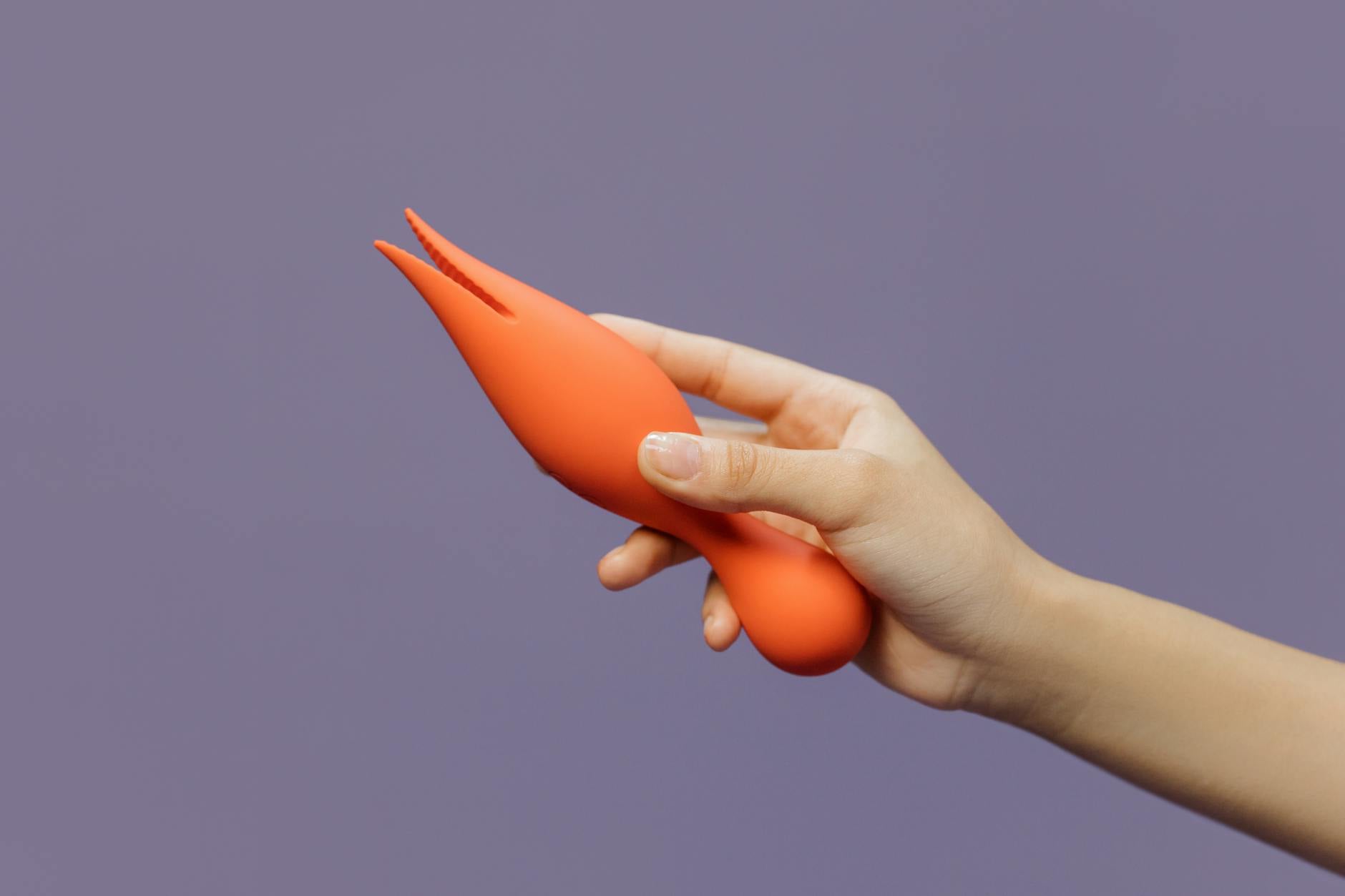
A lemon sucker vibrator uses air-pulse technology instead of direct vibration. This matters because air-pulse stimulation activates nerves without the mechanical grinding pressure that can feel jarring when tissue sensitivity changes. You're not vibrating against delicate tissue. You're creating waves of suction that simulate the sensation of oral stimulation without the intensity of a traditional vibrator.
This design is particularly forgiving during hormonal transitions because you can adjust the intensity without changing the type of stimulation. The lem vibrator offers graduated patterns, which means you can start at a level that feels right for your current sensitivity and build up as your body warms up. No jarring intensity. No guessing whether you're hitting the right spot.
The seal also matters. With a traditional vibrator, you're pressing the whole device against your body and hoping the frequency matches your nerve response. With a lemon clitoral vibrator, the suction creates its own communication with your tissue. Your body isn't fighting the device. It's working with it.
The setup that matters
When your sensation is shifting, preparation becomes everything. This isn't extra. This is the difference between pleasure and frustration.
Start with water-based lubricant. Hormonal changes often reduce natural lubrication, which is why this step stopped being optional. Lubrication isn't a sign of failure. It's a sign that your tissue is honest. Use it generously on your vulva and on the lem vibrator's seal.
Budget 20 to 30 minutes for arousal. If you usually moved fast, this is your adjustment. Light touch everywhere first. Thighs, inner arms, neck, breasts. The goal is to activate your whole body's pleasure receptors before you introduce the vibrator. This primes your nervous system.
Start the lem vibrator on the lowest setting. Let the seal settle against your vulva without moving it around yet. Most people jump to medium or high intensity automatically because that's what worked before. You're not there yet. Let your tissue respond to the lowest level for 30 seconds. Then move up.
If certain areas of your clitoris feel sensitive in a good way and others feel sharp, angle the lem vibrator slightly. The device is designed to give you control through positioning, not just button-pushing. Small adjustments change everything.
What shifts in sensation actually feel like
Some people report that clitoral sensation feels more concentrated rather than radiating. Instead of pleasure spreading across the whole vulva, it's sharper and more localized. This doesn't mean less pleasure. It means your nervous system is organizing sensation differently. A lemon clitoral vibrator works here because you can isolate the exact spot that's responding and stay there without hunting around.
Others notice that orgasms take longer but feel deeper. The build-up is less dramatic, but the release is more full-body. This is actually common after hormonal shifts. Your body is learning to distribute pleasure differently. Some people say their best orgasms ever come during this phase because there's less performance pressure and more room for genuine sensation.
A few people experience what they call numbness, which is usually not true numbness but decreased responsiveness to light touch. This is where a lemon sucker vibrator really earns its place. The suction creates a stronger signal to your nerves without being harsh. You're getting clear feedback from your tissue instead of guessing whether anything's working.
Rebuilding with a partner
If you're exploring sensation changes with someone, separate two conversations that usually get tangled. One is physical: your body is responding differently to stimulation and needs adjusted technique. The other is relational: you might want more time, different kinds of touch, or a chance to rediscover each other.
One of you might bring the lem vibrator into partnered play. You're using it with them, not instead of them. Some couples find that introducing a lemon clitoral vibrator during this phase actually rebuilds connection because it removes the pressure to have instant orgasms or to know exactly what your partner's body needs right now.
If your partner is hesitant about toys, frame it differently. You're not replacing them. You're adapting to a temporary shift. Something like: "My body's responding differently right now, and this helps me feel good again. I want to enjoy time with you, and this makes that happen." Most partners who understand it's practical rather than rejecting get on board pretty fast.
When sensation changes are also about stress or medication
Hormones aren't the only thing that shifts sensation. Stress, antidepressants, thyroid medication, and even sleep deprivation can make arousal slower or sensation duller. When multiple factors are at play, you might need to address more than just technique.
If you're on a new medication and sensation flattened suddenly, talk to your prescriber about timing. Some meds work better if taken at night. Some have less sexual side effect at different doses. You might have options you don't know about.
Stress is its own hormone system. Cortisol suppresses arousal. If your sensation shifted when your stress shifted, managing stress comes before expecting pleasure to rebound. That's not weakness. That's how your nervous system works.
A lemon vibrator can still be part of your solution here because using it consistently, even when sensation feels muted, keeps your nervous system trained for pleasure. Think of it like physical therapy for arousal. You're not forcing sensation. You're keeping the pathway open.
The timeline for adaptation
Sensation changes don't resolve on a fixed schedule. Some shifts settle in 6 to 8 weeks. Others take months. The important thing is knowing that adaptation is normal and that what feels uncomfortable now might feel incredible once your body settles into the new normal.
Many people I work with report that after they stopped fighting the change and started exploring it, sensation actually deepened. They discovered parts of their body they'd never properly paid attention to. They found out what their current body actually liked rather than what their old body used to like.
This is not consolation. This is real. Midlife sexual awakening is a clinical phenomenon, not a motivational poster. People with vulvas often experience their most satisfying orgasms in their 40s and 50s because there's less distraction and more permission. Your sensation hasn't peaked. It's redirecting.
FAQ
Can hormonal changes make the clitoris permanently less sensitive?
No. Tissue thickness and blood flow change with hormones, but your nerve endings don't disappear. Once hormones stabilize or you adjust to the new baseline, sensitivity typically normalizes. In the meantime, sensation just reads differently. A lemon clitoral vibrator works within that shifted range rather than fighting it.
Why does a lemon vibrator feel better than my old vibrator after hormonal changes?
Air-pulse technology doesn't depend on direct friction against tissue. When hormonal changes make tissue more delicate or sensitive, suction-based stimulation is gentler while still being very effective. The sealed design also creates consistent sensation without the repetitive pressure that can feel uncomfortable.
Is it normal for arousal to take much longer after hormonal changes?
Completely normal. Hormones regulate both desire and arousal speed. When they shift, your body's pacing changes. This doesn't mean anything is wrong. It means you benefit from longer foreplay and a different rhythm. Many people find that slower arousal actually leads to longer-lasting pleasure.
Can I use a lemon sucker vibrator if I'm taking medication that affects sensation?
Yes. Some medications make sensation duller or slower, but that doesn't mean sensation isn't there. A lemon clitoral vibrator's suction technology often works well in these situations because it creates a stronger signal to your nerves. Start on the lowest setting and work up as your body responds.
Should I stop using vibrators during hormonal transitions?
No. Consistent use actually helps your nervous system stay trained for pleasure. When you step back from pleasure during shifts, it takes longer to rebuild connection. Keep using what feels good, adjust intensity as needed, and let your body learn the new rules gradually.
What if nothing feels good right now?
That usually means one of three things: you need more lubrication, you need more warm-up time, or there's another factor (stress, sleep, medication timing) worth investigating. Don't assume pleasure is gone. Assume your current conditions aren't the right match for pleasure yet. A lemon vibrator is just one tool. Sometimes the bigger work is addressing sleep, stress, or medication timing first.