Let's talk about what happens to desire when your relationship shifts
Relationships don't stay still. You move in together, you move apart. Kids arrive, kids leave. Work gets busier, then quieter. Someone gets sick. Someone changes jobs. You both age. And somewhere in all of that, the physical connection that once felt automatic starts to require intention.
Most couples assume this is a problem to fix. It's not. It's a signal that something in the relationship has genuinely changed, and intimacy needs to change with it.
The disconnect nobody talks about
Here's what happens in most long-term relationships: early on, desire is easy because novelty and uncertainty fuel arousal. Your nervous system is on high alert. Three years in, five years in, ten years in, that novelty is gone. Your nervous system settles. That's not a sign the relationship is broken. It's a sign you've moved from the infatuation phase into something deeper.
But here's the part that catches people off guard. That deeper phase requires different tools. The same things that worked when you were figuring each other out often stop working when you're comfortable. Sex becomes less spontaneous and more logistical. Desire becomes less about "I want you right now" and more about "I want to feel connected to you."
A lot of people interpret this as a loss. They're not losing desire. They're losing access to the arousal triggers that used to be automatic. There's a difference.
Why relationship transitions tank intimacy specifically
When a major life transition hits, the first thing that disappears is usually sex. Not because you've stopped loving each other. Because your nervous system is already overwhelmed. Adding another demand, even a pleasurable one, feels like too much.
Think about what happens to your body during a job change, a move, a health scare, or even just a major schedule shift. Your parasympathetic nervous system (the "rest and digest" mode you need for arousal) goes offline. You're in sympathetic mode ("fight or flight"). It's hard to want sex when your body thinks you're under threat.
The other piece is that intimacy requires attention, and attention is the first casualty of transition. You're managing logistics. You're managing emotions. You're managing the grief or excitement of whatever is changing. Your partner is doing the same. The gap between you widens not because you care less, but because you're both drowning.

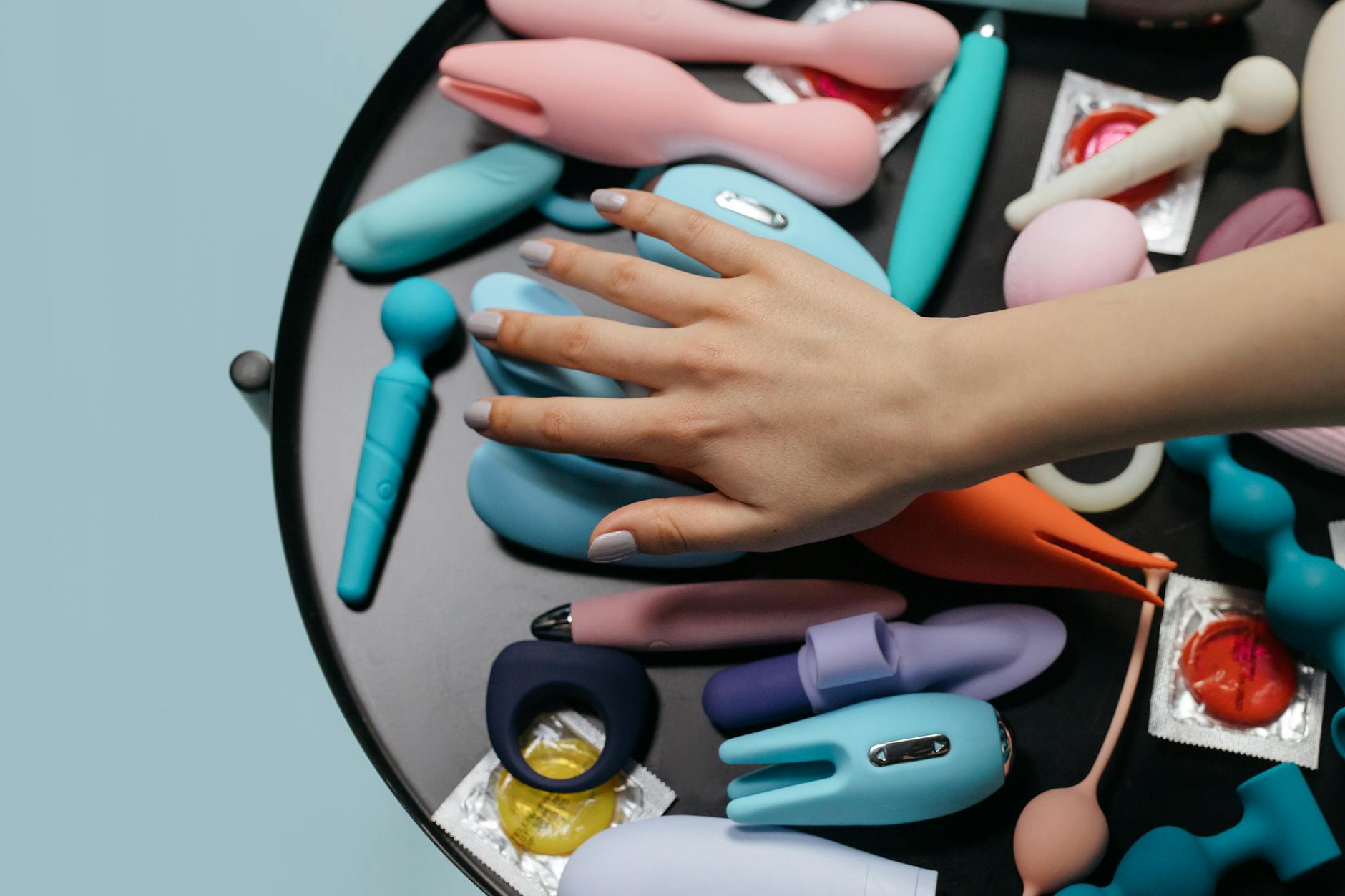
Photo by cottonbro studio on Pexels
Where a lemon clitoral vibrator actually fits in
This is where I'm careful. A toy isn't going to fix a relationship that's struggling. But it can be a bridge when you're in transition.
Here's what a lemon vibrator specifically does: it removes the pressure to perform. When you're in a major relationship shift, the worst thing that can happen is one partner waiting for the other to initiate, and the other partner feeling obligated to want something they don't actually feel.
Introducing a lemon sucker into your intimate life, whether solo or with your partner, gives you both permission to explore pleasure without the conversation becoming about relationship health or compatibility. You're not trying to prove anything. You're just exploring sensation.
For solo play during relationship transitions, a lemon vibrator is even more valuable. When your partner is stressed or distant or when you're both managing major change, solo pleasure becomes an act of self-care instead of resentment. You're not waiting for someone else to meet a need. You're meeting it.
The specific patterns that happen during major transitions
Let me name a few common ones so you recognize yourself.
Pattern One: You want it, they don't. One partner is ready to reconnect, the other is still in shock or stress mode. A lemon vibrator means you don't need them to be ready yet. You can keep pleasure in your life independently.
Pattern Two: You both want it, but logistics are chaos. You have ten minutes instead of an hour. A clitoral vibrator is efficient. You can use it alone or together. It doesn't require elaborate setup or extended foreplay.
Pattern Three: You've moved from spontaneous to scheduled. This one's tricky because scheduled sex can feel like a chore. But a lemon clitoral vibrator can transform scheduled sex from obligation into something you're genuinely looking forward to.
How to actually use a lemon vibrator through relationship transitions
Start with solo exploration. Seriously. If you haven't used one alone, don't start with your partner in the room during a stressful time. Use it alone first. Figure out what you like.
Then, if you want to involve your partner, start with the conversation before the sex. "I've been using this, and I really like it. I'd love to explore it together sometime when we're both feeling good." Not during the transition chaos. When you're both having a normal day.
Use it alongside partnered sex, not instead of it. The lemon vibrator is an addition to connection, not a replacement. It can make sex more pleasurable, faster, more reliably orgasmic. All of those things actually help rebuild the habit of sex when things have been disconnected.
If your partner is hesitant about toys, that's worth addressing separately. You don't need their permission to use a vibrator alone. But if you want to use it together, you might need to have a conversation about what the hesitation is really about. Often it's not about the toy. It's about feeling replaced or inadequate. That's a relationship conversation, not a sex toy conversation.
The permission piece
Here's what I see most often in my practice: one partner uses a lemon vibrator to reclaim pleasure during a difficult time, and the other partner feels relieved rather than threatened. "Oh good, you're still interested in sex. I thought we'd lost that." The toy becomes a signal that intimacy still matters to you, even when the relationship is going through something hard.
That's the real value. It's not that a vibrator fixes things. It's that it keeps pleasure alive in your nervous system while you're both managing transition. And when the acute stress passes, you have a way back into sex that's faster and more reliable than waiting for spontaneous desire to magically reappear.
When to get professional support alongside the physical
If intimacy has been disconnected for more than six months, or if one partner has completely lost interest in sex even in calm periods, that's worth talking to a therapist about. Not because something is broken. But because that's information about the relationship that needs attention.
A lemon vibrator can help during transitions. It can't fix deep relationship rupture. But most relationship transitions aren't ruptures. They're just periods where connection temporarily goes dormant. The vibrator is permission to keep pleasure alive while you both adjust.
What actually rebuilds intimacy through change
It's not the toy. It's the intention. Using a lemon clitoral vibrator signals to your partner and to yourself that pleasure and connection matter, even in chaos. It says "I'm not giving up on this part of us."
Intimacy in long-term relationships through big transitions is less about spontaneous desire and more about commitment. A commitment to keep touching. Keep exploring. Keep your nervous system connected to sensation and pleasure instead of just stress and logistics.
A lemon vibrator is a tool for that. Nothing more, nothing less.
People also ask
Can we use a lemon vibrator if we're barely speaking about the changes happening?
Not really, not yet. Introducing a toy when you're not communicating about the actual transition usually makes things worse. It can feel like a band-aid on something that needs real conversation. Start by naming what's changing. Then introduce the vibrator as something that helps you both stay connected physically while you navigate everything else.
Will using a lemon vibrator on my own make my partner feel bad?
Not unless you hide it. If you're using it openly and casually, most partners see it as neutral or even positive. It's when it becomes secretive that it starts to mean something else in the relationship. If you're nervous about your partner's reaction, that's worth a conversation before, not during.
How often should we use a lemon vibrator during a major transition?
As often as feels good. There's no rule. Some couples find that using it a few times a week keeps them connected. Others find it's once a month. The frequency matters less than consistency. If you use it twice in six months, it's not serving the purpose of keeping pleasure alive. If you're using it weekly, that's usually plenty.
Does using a clitoral vibrator mean my partner isn't satisfying me?
No. Most of the time it means your nervous system is overwhelmed and needs a shortcut to pleasure. Or it means your body responds to a specific type of stimulation that fingers or a partner's body don't provide. Neither of those things is about your partner failing. They're about your body's mechanics.
Should I tell my partner I'm using a lemon vibrator during our relationship transition?
Yes, unless there's abuse or controlling behavior in the relationship, which is a different problem. Your partner knowing that you're maintaining your own pleasure independently usually reduces anxiety on both sides. It signals that you're taking care of yourself. It's sexy information, not threatening.
What if my partner wants to use the lemon vibrator on me, but I haven't used it alone?
Go back and use it alone first. You'll enjoy it more with your partner if you already know what it does. You'll also be less anxious because you know what sensation to expect. The solo exploration is always worth it, even if your goal is partnered play.
The through-line
Relationship transitions are hard. They scramble everything, including sex. A lemon vibrator isn't magic. But it is permission. Permission to keep your body alive and connected to pleasure even when your relationship is in flux. And that permission, more than anything else, is what helps couples actually stay connected through change rather than just enduring it separately.
If you're navigating a major shift with your partner and you want to talk through what's happening, reach out here. That's what I'm here for.