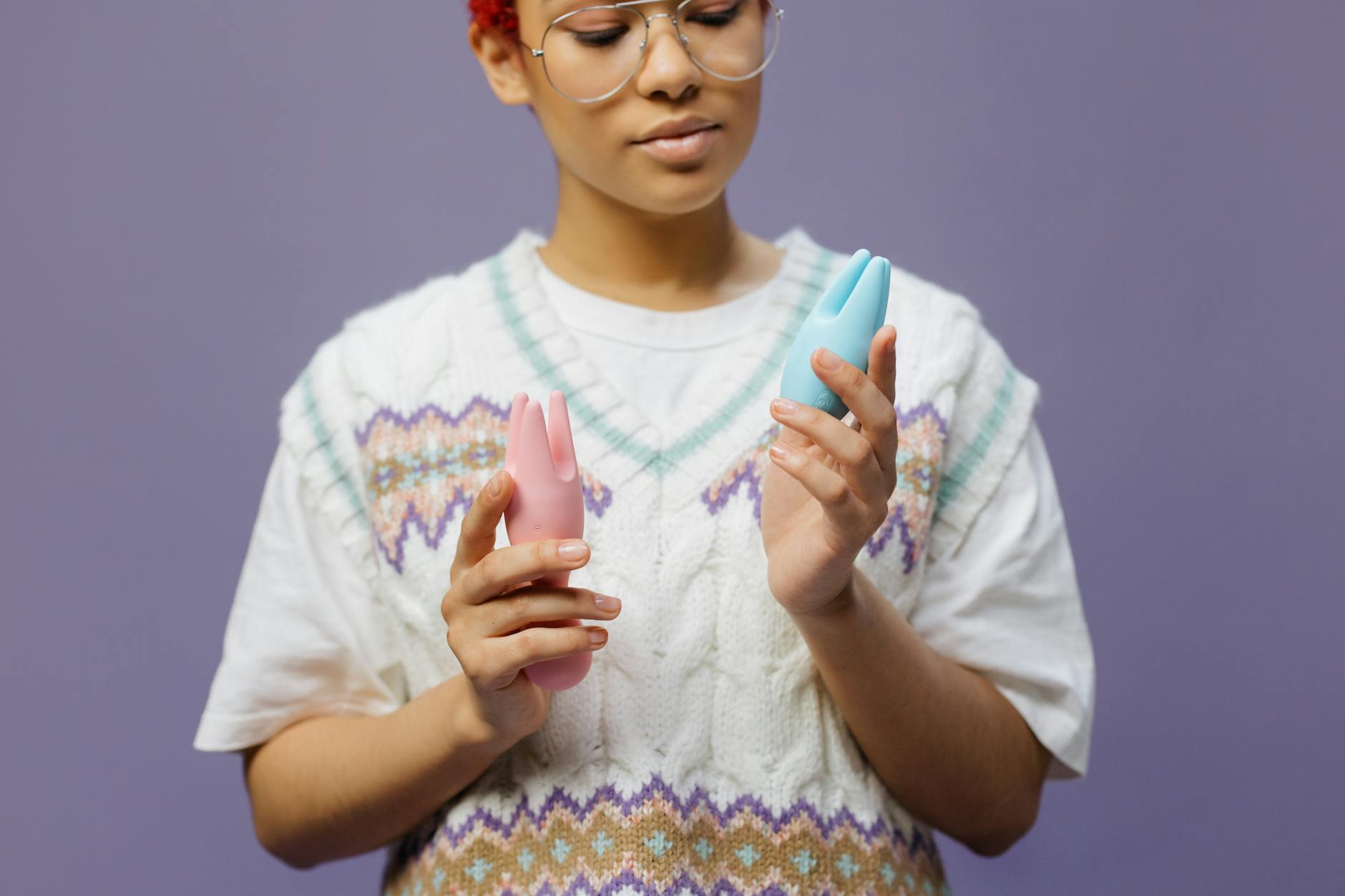
The hesitation is rarely about the toy
Let's start here. When a partner says they're uncomfortable with vibrators, they're usually not actually worried about the device itself. They're worried about what it means. Will you leave them? Are they not enough? Does this mean the relationship is broken? These are the real questions hiding underneath the "I don't know about toys" conversation.
I work with couples on this constantly, and I can tell you with certainty: the anxiety lives in the story, not the silicone.
Why partners get nervous about introducing toys
Three big fears show up over and over in my therapy sessions.
First is replacement anxiety. Your partner worries that the toy will replace them. This is almost never about the toy's power, by the way. It's usually about feeling like they're already not enough, and the vibrator is proof. If your relationship has had conflict around desire mismatch or emotional distance, this fear lands harder.
Second is the performance shift. Introducing a toy can feel like a critique. It can read as "what you're doing isn't working, so here's a device." That's painful to hear, even if it wasn't what you meant. Your partner might feel like they failed a test they didn't know they were taking.
Third is identity threat. Some people connect their sexuality directly to their sense of themselves as a partner. A vibrator feels like external validation that they're not sexual or capable enough. This is especially common in people who were raised with messages that real sex is only penetration or partnered touch.
None of this is logical. All of it is real.
The conversation framework
Timing and framing matter more than you'd think. Here's what actually works.
Start outside the bedroom
Do not introduce this conversation in bed. Do not bring it up right before sex. Pick a calm moment when you're both rested and clothed. A walk, a morning coffee, a quiet evening. Somewhere the conversation doesn't feel like it's leading anywhere sexually. That removes the immediate performance pressure.
Lead with desire, not dysfunction
Instead of "I want a vibrator because I can't orgasm," try "I read about this toy that works with clitoral stimulation, and I'm really curious to try it. I think it could feel amazing for both of us." The first version implies a problem. The second implies pleasure and exploration.
If you do have difficulty with orgasm, that's worth naming, but pair it with curiosity instead of frustration. "My body takes a while to get there, and I'd like to explore what helps." That's different from "Nothing you do is working."
Name what you need from them
Don't assume your partner knows what support looks like. Say it clearly: "I'm not asking you to feel one way or another about this. I'm asking you to stay curious with me and let me explore what feels good." Or: "I need to know you're not going to make me feel weird about this."
This removes the burden of them having to guess what kind of partner you need them to be.
Give them space to name their fears
After you've talked about what you want, ask: "What comes up for you?" Then listen without defending or fixing. Let them say the replacement anxiety, the performance worry, the weird jealousy of a toy. Don't minimize it. "I hear that," is often enough. You don't have to solve it immediately.
How to frame the lemon vibrator specifically
Clitoral vibrators like the Lem work differently than penetrative toys, and that distinction actually matters in these conversations.
If your partner's anxiety is rooted in replacement fear, a clitoral vibrator is actually easier to navigate than something that mimics penetration. You can frame it as complementary: "This isn't about replacing you. It's about external stimulation while we're together, or for times when I want to explore solo. It makes penetration feel different too, sometimes better." That's honest and it reframes the toy as an addition, not a replacement.
The suction action of lemon adult toys also feels quite different from a traditional vibrator, which can help partners feel less like you're just using a toy and more like you're experimenting together with something novel. If your partner is open to trying it with you, that shared novelty can actually build connection instead of creating distance.
When to introduce use, and how
Don't expect your partner to be comfortable with the toy immediately. There are stages.
Stage one: awareness without presence. You use the vibrator alone, and your partner knows about it. You're not hiding it. This removes shame and lets them adjust to the idea without pressure. No surprises during sex. Just matter-of-fact acknowledgment. "I'm going to use it while we have sex tonight" works. So does "I used it this morning, it felt great."
Stage two: presence without participation. You use the toy while your partner is in the room during sex, but they don't interact with it. They can see it's not taking their job. They can see it's just an addition to what's already happening. Many partners relax significantly once they realize the toy isn't replacing the parts of sex they do contribute.
Stage three: joint exploration. Only when your partner is actually ready, you might suggest using it together. "Would you be interested in helping, or just watching?" gives them a choice. Some partners become genuinely curious once they see their partner's pleasure increase. Others stay at stage two, and that's fine.
Handling resistance that doesn't shift
Sometimes you'll have this conversation and your partner will still say no. That's worth taking seriously, but it's also worth understanding the difference between "I'm not ready" and "I don't want you to."
You get to explore your pleasure. That's not negotiable. If your partner is saying you can't use a vibrator even alone, that's a boundary issue, not a compromise issue. That's worth exploring with a couples therapist or a trusted friend because it points to control, not just discomfort.
If they're saying "I'm not ready to participate," that's different. Respect that timeline. Use the toy alone. Let them watch your pleasure increase over time. Sometimes comfort grows from witnessing rather than participating.
The reassurance that actually lands
Your partner might need to hear this directly: "I love having sex with you. I want to have sex with you. This doesn't change that. What it does is help me understand my own body better, and when I understand myself better, I'm more present with you."
That's not always enough, but it's true, and it matters.
FAQ
What if my partner says they feel replaced?
Name it directly. "I understand why it might feel that way. Here's what's actually true: I still want to have sex with you. I still think you're attractive and capable. What I'm doing is learning more about what my body needs." Then give concrete reassurance. Keep initiating partnered sex. Show, don't just tell, that the toy is supplementary.
Should I hide the toy if they're really uncomfortable?
No. Hiding it teaches both of you that there's something shameful happening. It also erodes trust when they find out, and they usually do. Transparency is slower but stronger. Store it openly. Use it openly. Don't make it a secret.
Can I use a lemon vibrator solo without telling them?
Technically yes. Practically, honesty is better. If they eventually find out, the secrecy becomes the real issue, not the toy. It's worth ripping that band-aid off early and having the actual conversation.
What if they want to use it themselves?
That's actually great. Some partners feel less threatened when they control the tool. Let them experiment. They might discover they enjoy the sensation of lemon clitoral vibrators too, or they might just enjoy being more involved in your pleasure.
How long does it usually take a hesitant partner to come around?
It varies wildly. Some partners shift in a single conversation once they understand the intent. Others need weeks or months of seeing that nothing has changed in the relationship before they relax. The key is not rushing them. Pressure usually confirms their fears instead of easing them.
What if they never accept it?
Then you need to decide what you need. You get to explore your sexuality. Full stop. A partner can have boundaries about their own participation, but they don't get to police your solo pleasure. If this becomes a real impasse, couples therapy is worth considering because the issue isn't actually about the toy.
Moving forward together
Introducing sex toys isn't just about adding sensation. It's about communication, trust, and showing up for each other's pleasure. When done with patience and honesty, it can actually deepen connection. Your partner isn't your enemy here. They're usually just scared. And scared people need reassurance, not pressure.
If you're navigating this and it feels stuck, talking with a couples therapist or visiting Helon Nancy Lemon's contact page can help. Sometimes a conversation with a neutral third party shifts everything.
Your pleasure matters. So does your relationship. Both things are worth protecting.