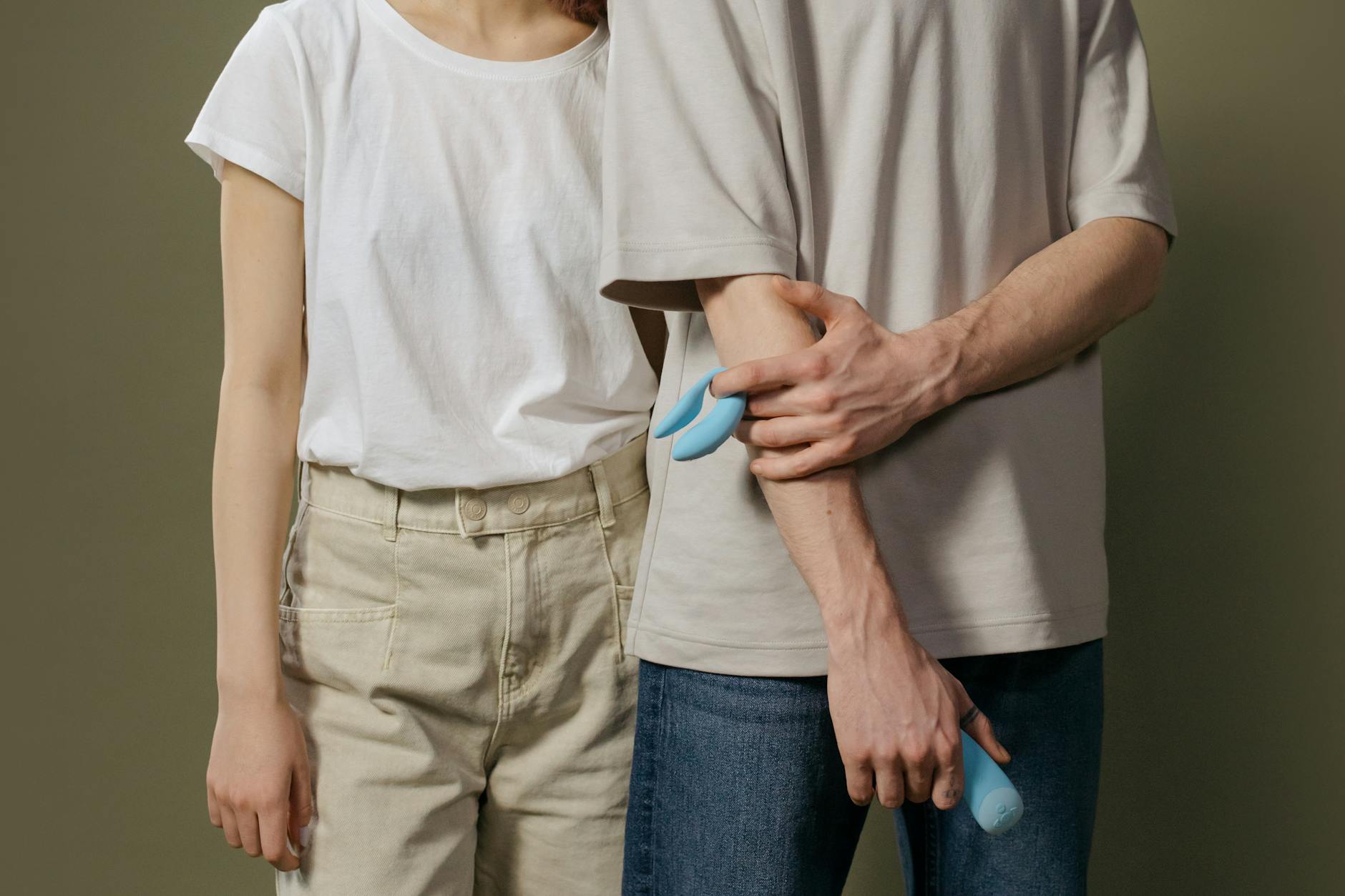
Here's what nobody tells you about pleasure after trauma
Reclaiming your sexuality after sexual trauma is not about forcing yourself to feel good, and it's absolutely not about a timeline anyone else set. It's about slowly, methodically giving yourself permission to experience pleasure on your terms. A lemon vibrator can be part of that journey, but only if you approach it the right way.
I've worked with hundreds of clients rebuilding their intimate lives after trauma. The pattern is always the same. They think they "should" be ready, so they push themselves too hard, too fast. Then their nervous system shuts down, they feel like they've failed, and they step back further. It becomes another way trauma wins.
The good news? Pleasure is learnable again. Your body hasn't forgotten how to feel good. It's just protecting itself. And that's actually healthy.
Why a lemon vibrator might work for trauma recovery
Lemon clitoral vibrators have three properties that make them useful during healing: control, predictability, and distance from traditional partnered sex.
First, control. You hold the device. You choose the pattern. You start and stop. After an experience where your autonomy was stripped away, this matters more than you might think. You're literally practicing saying yes and no to your own body again.
Second, predictability. A lemon vibrator does exactly what it did last time. There's no surprise, no sudden shift in intensity or mood. Your nervous system doesn't have to stay in high alert wondering what's coming next. That predictability is how the nervous system learns it's safe again.
Third, distance. A toy isn't a person. It has no agenda, no expectations, no ability to hurt you further. That's not a deficit. For someone in early recovery, it's exactly the right container to practice pleasure in.
This doesn't mean you'll never want partnered sex again. But starting with solo exploration using a tool like a lemon sucker gives your nervous system a chance to remap pleasure without the complexity and vulnerability of another body in the room.
The neurobiological reality of trauma and pleasure
When sexual trauma happens, your brain literally rewires threat pathways. Your nervous system gets trained to interpret sexual touch as dangerous. That's not a flaw in you. It's your body doing exactly what it's supposed to do to keep you alive.
Pleasure activation happens in the parasympathetic nervous system (rest and digest). Trauma response happens in the sympathetic system (fight, flight, freeze). These systems can't run at the same time. So if your nervous system is still in protection mode, pleasure doesn't happen. It's not that you don't want it. Your body is literally unable to access it while it's scanning for threat.
Regular, gentle, self-directed stimulation with a tool you control helps retrain those pathways. Over time, your body learns that this specific context (you, alone, with a lemon clitoral vibrator, in a space you've made safe) is not a threat. It's practice. And repetition is what rewires the nervous system.
Before you even touch the device
This matters more than the toy itself. You need to do three things first.
One. Create a physical safe space. Somewhere in your home where you know you won't be interrupted, where the door locks, where you feel grounded. Not necessarily your bedroom if that's charged. Could be a bathroom. Could be a locked living room with a thick blanket. Somewhere your body knows it's defensible.
Two. Clear your calendar and your mind. Trauma recovery isn't efficient. You might spend twenty minutes just breathing and noticing what you feel in your body. You might touch the vibrator and feel nothing, and that's fine. Don't set a goal of reaching orgasm. Set a goal of noticing one sensation without judgment. That's enough.
Three. Name what you're actually doing. This sounds odd, but internal narrative matters. Don't think "I'm trying to get over trauma." Think "I'm practicing pleasure on my own terms." The second version is empowering. The first is fraught. Reframe it.
How to actually begin
Start with the lemon vibrator turned off. Hold it. Feel the weight and temperature in your hand. That's session one. There's no "moving on" until you feel neutral about holding it.
When you do, turn it on at the lowest pattern. Don't put it anywhere near you yet. Listen to the sound. Feel the vibration in your hand. Notice if your nervous system tightens. If it does, turn it off and breathe for a few minutes. This is information, not failure.
Once the sound and sensation feel okay, you might move the vibrator closer to your body. Inner thigh. Not touching your vulva yet. Just proximity. You're teaching your nervous system that this stimulus is safe.
When proximity feels okay, you might rest the vibrator against your vulva without turning it on. Feel the shape, the firmness, the fact that it's an object and not a person. Again, this takes whatever time it takes.
Only when that feels neutral should you turn it on while it's in contact with your body. Start at pattern one. Most lemon vibrators have five to eight settings. You might stay on pattern one for ten sessions before you're curious about pattern two. That's the right pace.
What to do if your nervous system freaks out
At any point, you might notice a physical response that feels like threat. Tightening. Nausea. Racing heart. Feeling frozen. These aren't signs you've failed. They're signs your nervous system is processing something real.
When this happens, stop immediately. Don't push through. Put the device down, come back to your breath, and ground yourself in the room. Touch something cool. Feel your feet on the floor. Notice five things you can see.
Then sit with this: your body just told you something true. It needs more time. That's not weakness. That's wisdom.
Don't use the lemon vibrator for several days after this happens. Let your nervous system settle. Work with a trauma-informed therapist if you're not already. Healing isn't something a toy can do alone. It's something you do, supported by tools and professional help.
The difference between numbness and protection
One of the most common things I hear is "I can't feel anything, even when I try." This usually gets interpreted as damage. But it's usually just your nervous system being protective. If you can't feel pleasure, you can't be hurt by pursuing it. That's brilliant from a survival perspective.
Numbing isn't fixed by trying harder. It's fixed by safety. By slowness. By weeks or months of your nervous system learning that this specific context is not dangerous. Some clients take three months of gentle exploration before the first genuine sensation of pleasure comes back. Some take longer.
There's no timeline for this. And anyone who suggests there is doesn't understand trauma.
When to involve a partner (or not)
Here's my clinical take: don't. Not at the beginning. Use this time solo. Use a lemon vibrator, use your hand, use nothing. The goal is to re-establish your relationship with your own pleasure. That has to happen in isolation first.
If you have a partner, they can absolutely be part of this journey eventually. But not by jumping into sex. By having conversations. By learning what you've discovered about yourself. By slowly, with explicit permission at every step, rebuilding physical intimacy together.
For more on this, the post on <a href="/blog/how-to-transition-lemon-vibrator-use-from-solo-to-partnered-sex">transitioning from solo to partnered use</a> covers this landscape.
When professional support is non-negotiable
You need a trauma-informed therapist if you're noticing intrusive thoughts, flashbacks, dissociation, or panic responses. A vibrator is a tool for pleasure, not a replacement for clinical work. The two can happen in parallel. They should.
Specifically, look for therapists trained in EMDR, somatic experiencing, or trauma-focused CBT. These modalities work with the nervous system directly, not just the story. They're the gold standard for trauma recovery, and they pair beautifully with your own exploration.
If you're in a relationship, couples therapy with someone who specializes in trauma can also be invaluable. Your partner needs support too. They're not the problem. But they're living with the aftermath, and they need tools to help without adding pressure.
The long game
Reclaiming pleasure after trauma is not a quick arc. It's a slow unfurling. Some weeks you'll feel progress. Some weeks you'll feel stuck. Both are part of the process.
Your lemon vibrator is one small tool in a much larger toolkit. It can help you practice control, safety, and self-directed pleasure. But it works best alongside therapy, patience with yourself, and the understanding that healing isn't linear.
You deserve to feel good in your body again. Not because anyone owes it to you. Because you own your own pleasure, and reclaiming it is one of the most powerful things you can do.
People also ask
Is it normal to feel nothing when using a lemon vibrator after trauma?
Completely normal. Trauma teaches your nervous system to protect itself by dampening sensation. This isn't permanent. It's a temporary survival mechanism. With consistent, gentle exposure in a safe context, sensation almost always returns. The timeline varies wildly. Some people feel it in weeks. Others take months. Both are fine. If you're not noticing any shifts after six months of regular, trauma-informed practice, a conversation with a therapist is worth it. There may be additional processing needed.
Can I use a lemon vibrator if I'm still having flashbacks?
Approach carefully. Flashbacks are a sign your nervous system is actively processing trauma. Using any stimulation, even gentle, might trigger more flashbacks at first. This is actually part of the healing process, but it's not something to do alone. If you want to explore solo pleasure with a lemon clitoral vibrator while you're having active flashbacks, do it with the support of a trauma therapist who can help you work through what comes up. Don't white-knuckle your way through this.
How long until a lemon vibrator feels "normal" to use after trauma?
Normalization happens in layers. Physical comfort with the device itself usually comes first (weeks to a couple months). Pleasure sensations come next (months to longer). Emotional ease and the absence of anxiety comes last. Most clients report feeling genuinely relaxed using a lemon vibrator around the six-month mark. But this is deeply individual. Some people move faster. Some need a year or more. The fact that you're asking this question suggests you're ready to start. That's the only real timeline that matters.
What if my partner wants to be involved in my healing right away?
Talk to them about why you need solo time first. Frame it as you need time to rebuild your own nervous system's safety signals, not as a rejection. A supportive partner will understand. If they push or make it about them, that's a yellow flag. Healing from trauma while managing a partner's needs is exhausting. You deserve space to do this work. If your partner is unsafe or unsupportive, that's separate work entirely, often with professional help.
Can I use a lemon vibrator instead of therapy?
No. A vibrator is a tool for exploring pleasure and building comfort. Therapy is where you process what happened, remap your nervous system's threat responses, and rebuild a sense of safety in your body and world. They're complementary, not interchangeable. Use both. Therapy first if you're still in acute distress. Use the vibrator as you build stability. Neither alone is enough.
How do I know if I'm progressing?
Progress looks like: less anxiety before and during solo exploration, moments of genuine sensation without panic, the ability to be present in your body for longer stretches, decreased flashbacks during intimate situations, and most importantly, a sense of agency. You're choosing this. You're not fighting yourself. That's the marker. Not orgasm. Not intensity. Choice and presence.
Final thought
Your pleasure belongs to you. Not to anyone else's timeline or expectation. Reclaiming it after trauma is some of the most important work you can do for your own healing and sense of wholeness.
A lemon vibrator can be part of that conversation, but only when you're ready and only as one tool among many. Start slow. Listen to your nervous system. Work with a professional. And give yourself the radical permission to take as much time as you need.
Your body isn't broken. It's healing. And that's exactly what it should be doing.