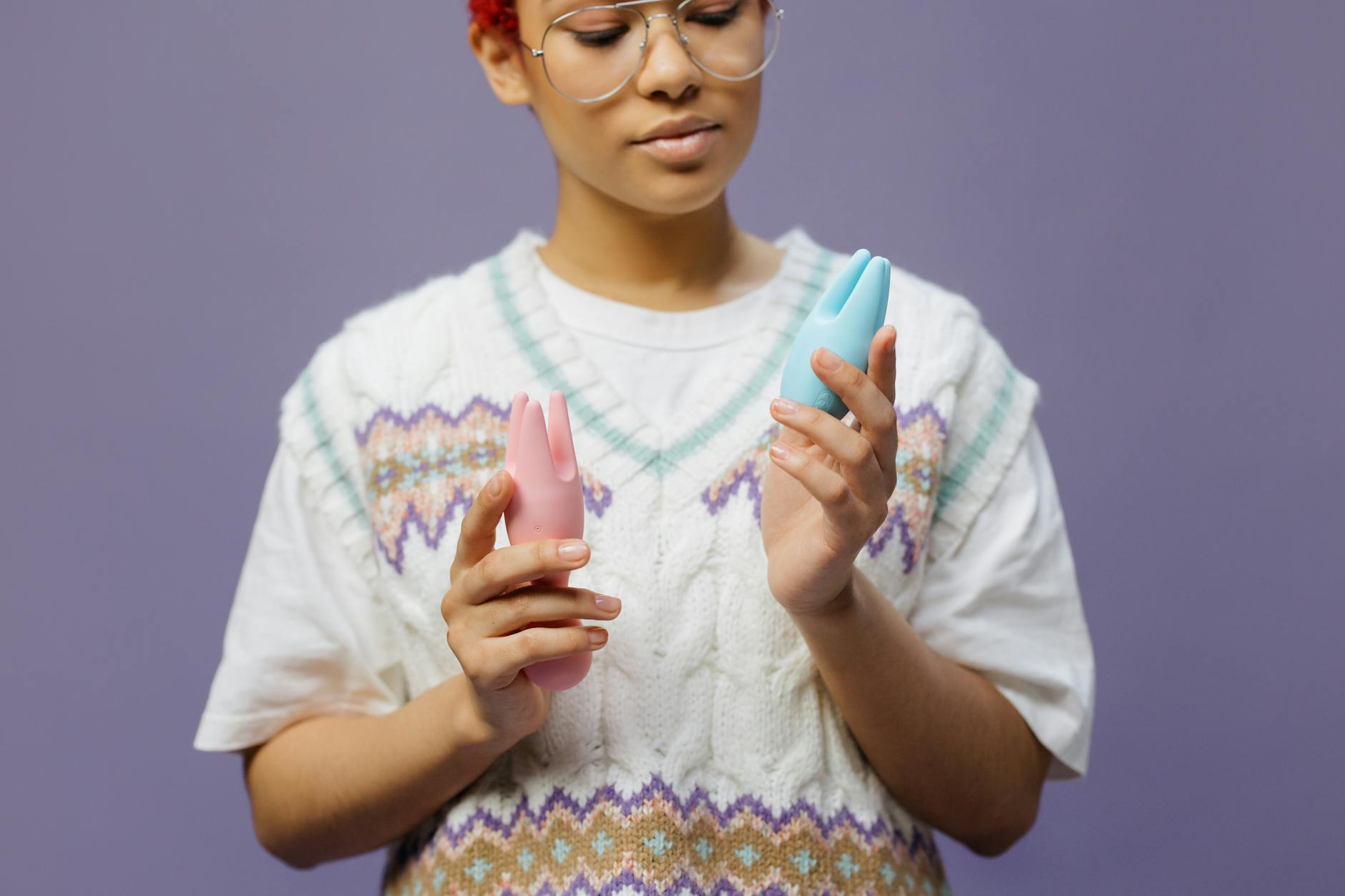
How to Use a Lemon Vibrator When You Want to Explore Sensation After a Long Sexual Pause
Let's acknowledge what nobody says out loud
You've been away from sex for months. Maybe longer. Maybe a lot longer. Whether it's because of illness, life stress, relationship rupture, grief, caregiving, or just the sheer exhaustion of existing, you're thinking about coming back to pleasure and it feels weird. Not exciting weird. Nervous weird.
Your body is unfamiliar to you now. You're not sure if it still works the way it used to. You're worried it might feel mechanical, or worse, that you won't feel anything at all. And if you're returning with a partner, there's a whole other layer of negotiation and vulnerability happening.
Here's what I want you to know from the start: this is one of the most common transitions I work with, and the people who navigate it best treat it like what it actually is. Not a return to "normal." A rebuild from the ground up, on different terms.
Why your body feels like a stranger (and why that's temporary)
When you pause sexually, several things happen. Your pelvic floor loses muscle tone. Blood flow to genital tissue decreases. The neural pathways that fire during arousal get quieter, not dead, just quieter. If you're in a partnership, you've also lost the rhythm and language you developed together. Everything is new again.
The good news: neuroplasticity works both ways. Your body will rewire quickly once you start the conversation again. Not overnight. But faster than you think. Most people feel a significant shift within two to four weeks of consistent, pressure-free exploration.
What matters most right now is not speed. It's consent. You're giving your own body permission to remember pleasure, which is a completely different ask than jumping back into the thing you used to do.
Starting solo before partnered play (if you have a partner)
If you're returning to sex with someone else, I strongly recommend starting alone first. This is not about avoiding your partner. It's about rebuilding your own sensory map without the weight of anyone else's expectations.
Here's why solo play matters for this transition: it removes the performance component. You get to be slow. You get to stop. You get to spend three weeks just noticing sensation in your clitoris without needing it to lead anywhere. That's genuinely rare, and it's incredibly valuable.
Set aside 20 to 30 minutes when you won't be interrupted. Not in bed if bed feels loaded with old memory. The couch works. A comfortable chair works. Anywhere you can relax without a narrative in your head about what's supposed to happen next.
Why a lemon vibrator works particularly well here
Let's be specific. A lemon clitoral vibrator, whether you're using the Lem or exploring another suction-style option, works well for this transition because it offers something different from what you might remember from before.
It's not aggressive. It's gentle. The patterns are progressive, so you start slow and build. Most importantly, it doesn't require you to guess the rhythm. Rhythm is one of the hardest things to find again after a pause. A good lemon sucker does that cognitive work for you.
Start on the lowest setting. Spend a week there. Notice what it feels like. Does it feel good? Numb? Overwhelming? All of this is data. None of it is failure.
The four-week rebuild protocol
Week one: exploration on lowest intensity. Ten to fifteen minutes. No goal except noticing sensation. If you don't orgasm, that's completely fine. You're literally rewaking nerve endings.
Week two: same time, same intensity, but now you're looking for the spot that feels best. Most people with clitorises have a spot slightly off-center that responds more readily. Find yours. Spend most of the session there.
Week three: you can try moving up to pattern two if week two felt consistently good. Or stay where you are. There's no schedule here. Only your body's readiness.
Week four: introduce variety. Try different patterns. Notice what the gap between patterns feels like. You're building a new sensation vocabulary.
If your body wants to orgasm earlier than this, let it. You're not on a timeline. But if you don't orgasm for six weeks and that's what happens, that's not uncommon either. The goal is sensation, not outcome.
Talking to your partner about re-entry
If you're restarting with someone, this conversation needs to happen before clothes come off. And it needs to happen fully clothed, ideally over tea, not in bed at night.
Tell them: "I've been away from sex for a while and I'm rebuilding my own connection to pleasure first. I want to explore with a vibrator alone for a few weeks before we reconnect. I'm doing this for me, not away from you."
Then tell them what you actually need from them. This might be: patience. Checking in without asking when you're ready. Not treating your solo exploration as rejection. Maybe it's reassurance that you still find them attractive. Maybe it's them telling you that they're not in a rush.
The couples who navigate this best have one thing in common: they separate the conversation about physical exploration from the conversation about relationship health. "I need time with my own body" is not the same as "I'm not attracted to you anymore." But they sound the same if you don't say it clearly.
When to introduce partnered touch
Once you've spent three to four weeks rebuilding solo sensation, you can start inviting your partner in. And I mean literally inviting. Suggest a specific activity. "I'd like to lie next to you while I use the vibrator" is a complete sentence. You don't need to explain it. You don't need to turn it into sex.
You might lie next to them and use the Lem while they read a book. That's a win. You're in proximity, they're witnessing your pleasure without needing to participate in it yet. This matters more than you think.
When you're ready for touch, start with non-genital contact. Hands on your back. Lips on your neck. Your body needs reminding that being touched is safe. Once that feels natural, you can explore whether you want genital touch from them while using the vibrator, or whether you want them to use the vibrator on you.
Each of these is a separate conversation and a separate decision.
Common speed bumps and what they actually mean
You might notice numbness. This is extremely common and extremely temporary. Your pelvic nerves need waking up. Keep going. Within two to three weeks of consistent, gentle stimulation, sensation returns.
You might experience flashbacks or sudden emotion during pleasure. This means something from the time away got stored in your nervous system. Your body is safe now, but it doesn't know that yet. Pause. Breathe. You can try again later, or you can take another week off. This is not a sign you're broken.
You might feel irritation or chafing. This usually means you're exploring for too long at too high an intensity. Back off. Natural lubrication takes time to rebuild too. Water-based lubricant is your friend here.
You might orgasm immediately and then feel nothing for weeks. Your body released something. That's fine. Don't chase the same response. Keep exploring.
What to tell yourself when it feels weird
It's supposed to feel weird. You've been away. Your body is meeting itself again for the first time in months. There's no normal to return to. There's only what happens next.
You're not broken. You're not too old. You're not undesirable. Your body is doing exactly what bodies do after a pause: it's remembering how to receive pleasure. That takes time. It takes gentleness. It takes a lemon vibrator that doesn't demand anything of you except that you show up.
The people I've worked with who move through this transition most successfully have one thing in common: they stopped waiting for it to feel like it used to, and started paying attention to how it actually feels now. Often, it's better.
Frequently Asked Questions
How long does it actually take to feel normal again after a sexual pause?
Most people report significant improvement in sensation within four to eight weeks of consistent, pressure-free exploration. Normal is a useless benchmark though. What matters is whether sensation is returning and whether you feel safe in your body. That timeline varies wildly based on how long you were away, what caused the pause, and how much stress you're carrying now. Three months away might take three weeks to rebuild. Three years away might take three months. Your body will tell you when it's ready.
Is it okay to use a lemon clitoral vibrator if I'm nervous about sensation?
Absolutely. In fact, a vibrator like the Lem is often easier to navigate than partnered touch because you control the intensity completely. You can start incredibly low and build at your own pace. The lowest setting on most suction vibrators is gentler than the lightest manual touch, which means you can explore the full range of sensation without ever pushing past your comfort zone.
What if my partner thinks I don't want them because I want to explore alone first?
This is where the conversation matters. Tell them explicitly: "I'm rebuilding my own pleasure first, but I want to come back to you after." Then actually do that. Once you feel reconnected to your own sensation, start the conversation about partnered exploration. Some partners need reassurance that this is happening with them as the eventual destination, not instead of them. That reassurance costs nothing and changes everything.
Can I use a lemon vibrator if I feel numb or disconnected from sensation?
Yes. This is actually one of the best uses. Vibration wakes up nerve endings that have gone quiet. If you feel numb, start at the very lowest setting and spend 10 to 15 minutes just noticing whether anything shifts. You might not feel pleasure in week one or week two. That doesn't mean it won't come. Nerve rewiring takes time. Stay consistent and gentle.
What if I don't want to come back to partnered sex?
Then you don't have to. Rebuilding solo sensation is valuable even if sex with your partner never restarts. If that's a conversation you need to have, a marriage coach can help you talk about what changed and what you both need going forward. Desire is not a switch you flip back on. Sometimes it stays in a different place than it was before. That's worth exploring together.
How do I know when I'm ready to invite my partner into this?
When you've spent at least three weeks alone with your body and you start wanting their presence. Not needing. Wanting. There's a difference. You'll know because the thought of them being present during your exploration will feel good, not anxious. That's the signal to have the next conversation.
The rebuild is not the same as the before
Here's what I want to land on: you're not fixing yourself. You're not returning to the person you were before. You're becoming the person you are now, in a body that's older and smarter and more selective about what it lets in. A lemon vibrator meets you exactly where that is. No judgment. No narrative about what should be happening. Just sensation, at your pace, on your terms.
The couples I work with who navigate this transition successfully aren't the ones who go back to what they had. They're the ones who build something new. Something slower. Something more honest. Something with less performance and more presence.
You deserve that. Your body deserves that. Start there.
If you want to talk through what coming back to pleasure looks like for your specific situation, reach out. I'm here to help you navigate the conversation with yourself and, if you have one, with your partner. Contact us anytime.