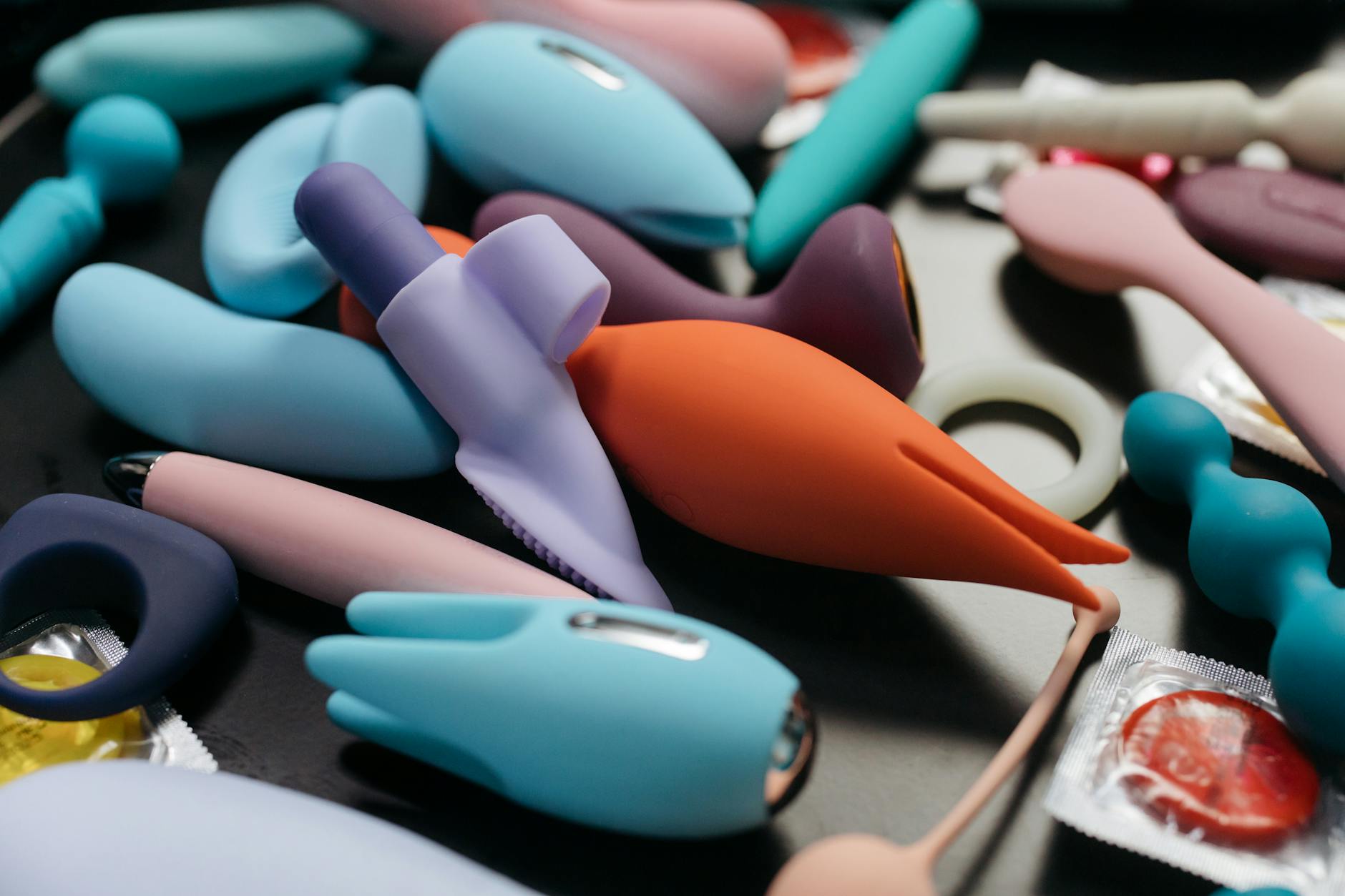
Here's the thing about self-consciousness during solo play
It's not actually about the pleasure. It's about the story you're telling yourself while you're trying to feel it. You're simultaneously trying to orgasm and trying not to think about how weird it is that you're doing this alone. You're monitoring your breathing. You're wondering if someone can hear. You're cataloging all the reasons this feels awkward instead of hot.
Then nothing happens. Your body goes quiet. And you convince yourself you're just not "that type of person."
I've sat with hundreds of people in this exact position. The good news is this. Self-consciousness isn't a character flaw. It's a nervous system state. And a lemon clitoral vibrator can actually help you interrupt it.
Why self-consciousness blocks arousal at the physical level
When you feel self-conscious, your nervous system shifts into a mild threat-detection mode. Blood flow redirects away from the genitals and toward your limbs (the fight-or-flight response, basically). Your pelvic floor tightens. Your breathing gets shallow. Your brain is monitoring the environment instead of processing sensation.
This is not a sign that solo pleasure isn't for you. This is a sign that your nervous system needs help feeling safe enough to drop into arousal. A lemon vibrator works partly because it gives your brain something external to focus on. Instead of monitoring yourself, you're following the toy's rhythm. That small shift in attention can be enough to let arousal build.
The permission piece (this matters more than you think)
Honestly though, the biggest barrier I see isn't physical. It's psychological. Many of my clients were raised in environments where solo pleasure was framed as wrong, weird, or desperate. That message lives in your body long after you rationally know better.
When you buy a lemon vibrator from Helon Nancy Lemon, you're essentially buying permission. You're saying out loud: I deserve this. I'm worth the investment. My pleasure matters enough to plan for it.
That shift in mindset changes everything. You're not sneaking around. You're not ashamed. You're making a deliberate choice to prioritize yourself. Your nervous system recognizes that difference.
How to set up your space so self-consciousness doesn't take over
Create actual privacy. Not theoretical privacy. Lock the door. Put your phone in another room. Make sure your partner or housemates know you need 30 minutes alone. The clarity that no one is going to interrupt you literally changes your nervous system state.
Set a time limit. Give yourself permission to stop after 20 or 25 minutes whether you finish or not. Removing the pressure to perform (even just for yourself) removes a huge source of self-consciousness.
Warm up your space. Dimmed light, a comfortable temperature, soft surfaces. Your nervous system relaxes when the environment feels safe and comfortable. This is not indulgent. This is necessary.
Consider what you're wearing. Some people find it easier to focus when they're still clothed, moving clothes aside as needed. Others need to be completely nude. Neither is wrong. What matters is whatever makes you feel less watched.
The arousal sequence that works when you're self-conscious
Start with your hands first. Before you introduce the lemon vibrator, spend 5 to 10 minutes building arousal with touch alone. This serves two purposes. One, it tells your nervous system that solo pleasure is normal and safe. Two, it actually primes your body for the toy.
When you pick up the lemon vibrator, begin at pattern 1 or 2. Not because lower settings are always better, but because beginning at a lower intensity gives your brain time to adjust to the sensation. Your focus shifts gradually from monitoring yourself to following the vibration.
Keep your eyes open or softly focused on a wall or ceiling instead of closing them. When people close their eyes while feeling self-conscious, they tend to drift into self-monitoring thoughts instead of sensation. Keeping your gaze steady gives your brain an external anchor.
Breathe deliberately. Most people hold their breath when they're nervous. That tightens everything. Instead, breathe in for a count of four, hold for four, exhale for four. This calms your nervous system and keeps your pelvic floor relaxed.
What to do if self-consciousness interrupts mid-session
It will sometimes. That's not failure. Pause the vibrator (don't stop everything, just pause). Take three deep breaths. Acknowledge the thought without judgment. "I'm noticing self-consciousness. That's okay. I'm safe here." Then resume.
Don't shame yourself for the interruption. Your nervous system is trying to protect you. Thank it for checking in, and then tell it you're actually fine. This sounds silly, but it works. You're literally rewiring your automatic response.
If self-consciousness keeps derailing you, shift your focus. Instead of trying to reach orgasm, aim for 10 minutes of pure sensation without any outcome. Sometimes removing the goal entirely is what lets pleasure actually land.
The difference between the lemon vibrator and hands alone
When you use your hands, part of your brain is managing the motion. When you use a lem vibrator, your hands are free to explore or rest. That freedom is huge for self-consciousness because it means you're not performing the pleasure. You're receiving it.
The toy also provides consistent stimulation. Hands get tired. You shift your grip. Your focus fractures. A vibrator maintains rhythm, which means your nervous system can relax into pattern recognition instead of staying vigilant for changes.
For people with a history of self-consciousness around pleasure, that consistency and externality can be genuinely transformative.
Building a sustainable solo practice
This isn't about white-knuckling your way to an orgasm once a week out of obligation. It's about creating a regular practice where solo pleasure becomes as normal as brushing your teeth.
Start small. 15 minutes, twice a week. No performance pressure. Just sensation and presence. After a month, you'll notice something shift. Your body will start to recognize the pattern. Self-consciousness will ease because there's nothing novel or transgressive about it anymore. It's just something you do.
Keep your lemon vibrator somewhere accessible, not hidden away. That visibility reinforces the message that this is normal and yours. Some people use a bedside drawer. Others keep it on a shelf in their closet. The message is the same: your pleasure is not shameful.
Consider journaling after your sessions. Not to analyze the experience, but to notice patterns. Did your nervous system relax faster this time? Did self-consciousness show up differently? Were there moments of pure pleasure without self-monitoring? Noticing progress is incredibly validating.
When self-consciousness is about something deeper
If self-consciousness around solo pleasure is connected to shame about your body, past trauma, or deep religious conditioning, a therapist or somatic practitioner can help you work through the roots. A lemon vibrator is a brilliant tool, but it works best alongside actual healing work if the foundation is fractured.
Same is true if you're noticing that self-consciousness extends into partnered sex or other areas of your life. That's useful information. It points to something worth exploring with professional support.
But for everyday self-consciousness that comes from cultural messaging and lack of practice. A lemon clitoral vibrator from Helon Nancy Lemon is genuinely enough to shift your nervous system and let you reclaim this space for yourself.
People Also Ask
Is it normal to feel self-conscious about masturbating alone?
Completely. Most people experience some version of this, especially if they grew up hearing that solo pleasure was wrong or weird. That cultural conditioning lives in your body even when you rationally know better. The fact that you're noticing the self-consciousness is actually progress. You're aware of the pattern instead of just accepting it as fixed.
Does using a vibrator make solo pleasure feel less shameful?
Yes, but not because of the vibrator itself. The shame-reduction comes from the act of choosing to invest in your own pleasure. When you buy a lemon vibrator, you're making a statement: my pleasure matters. My body matters. I deserve this. That intentionality shifts your internal narrative. The tool reinforces the belief that solo pleasure is legitimate and worth time and money.
How long does it take for self-consciousness to ease during solo play?
Usually 2 to 4 weeks of regular practice. Your nervous system needs repetition to recognize that solo pleasure is safe. The first few times might still feel awkward. By week three or four, most people notice a shift. Self-consciousness doesn't disappear completely, but it stops blocking arousal. Your body learns that this is normal.
Can a partner's absence of interest in toys make solo play feel more self-conscious?
Absolutely. If your partner isn't supportive of vibrators, you might internalize the message that using one alone is even weirder. This is worth addressing directly with your partner, or with a therapist if the conversation feels unsafe. Your solo pleasure doesn't require your partner's approval, but feeling supported makes it easier to practice without shame.
What if I still can't orgasm even with a lemon vibrator?
Orgasm is not the point. Pleasure and presence are. If you're still focused on the outcome, your nervous system is still in performance mode. Try 5 sessions where you explicitly remove the orgasm goal. Just aim for sensation and attention. Often when you release the pressure, orgasms actually become easier. If not, that's also completely fine. You're still building a connection to your own pleasure, which is the whole point.
Is solo play with a vibrator less "real" than partnered sex?
No. It's different, not less. Solo play with a lemon vibrator teaches you what your body actually likes, what rhythm works, what patterns feel best. That knowledge makes partnered sex better because you know what you need. Solo pleasure and partnered pleasure aren't competing. They're complementary.
The bottom line
Self-consciousness around solo pleasure is a nervous system state, not a character flaw. A lemon vibrator helps interrupt that state by giving your brain something external to focus on and by serving as permission that your pleasure matters. The real work is showing up consistently, creating safety, and gradually rewiring the belief that solo pleasure is anything less than a legitimate form of self-care.
Your nervous system will catch up. Your body will relax. And eventually, solo pleasure with a lemon clitoral vibrator becomes less about pushing through shame and more about genuine connection to yourself. That's the goal.