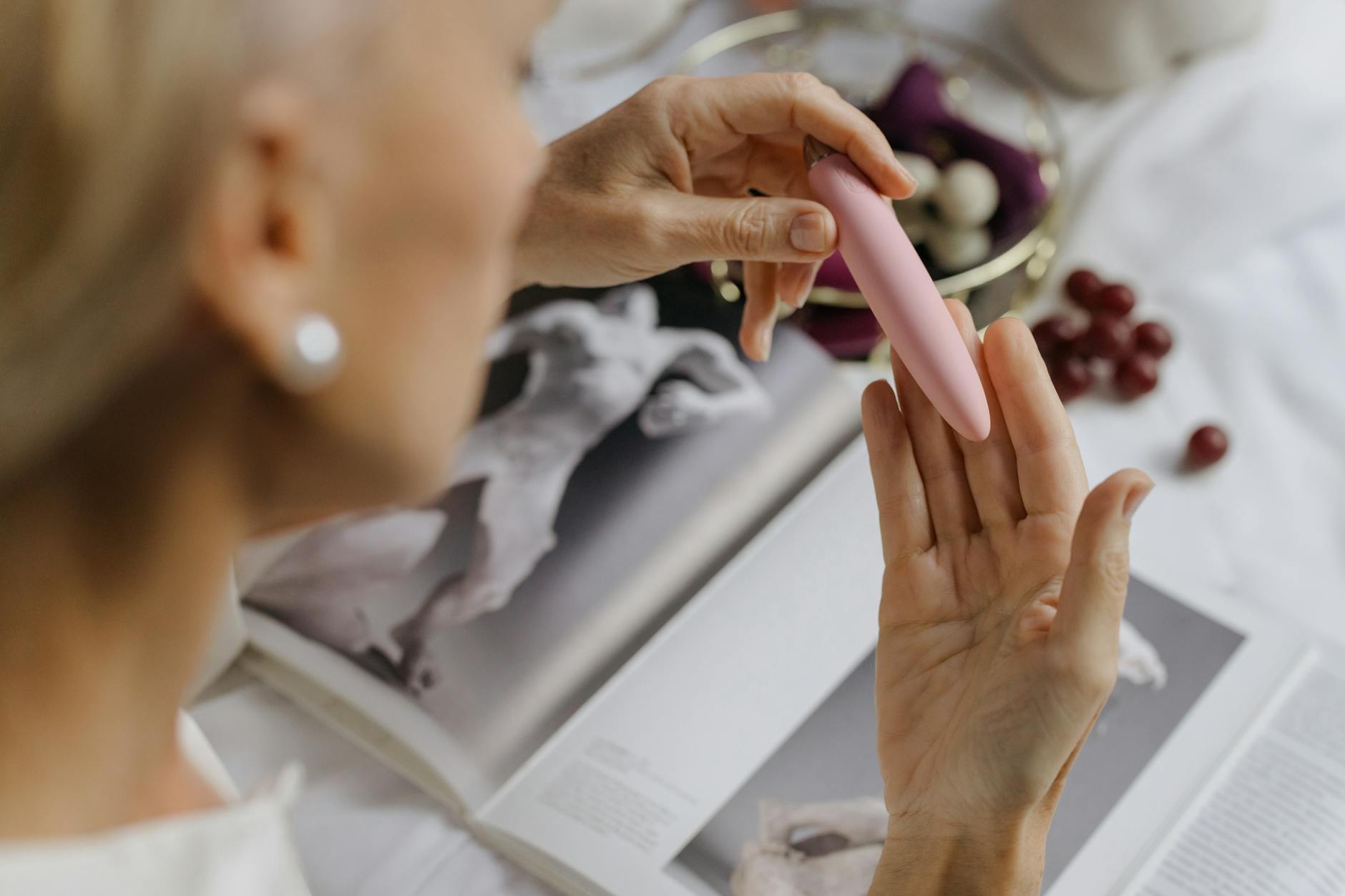
Let's talk about pelvic recovery and pleasure at the same time
Here's what nobody tells you: healing your pelvic floor and exploring pleasure aren't mutually exclusive. They actually work better together. The problem is figuring out where the line is between gentle exploration and something that sets you back.
If you're recovering from childbirth, pelvic floor physical therapy, surgery, or an injury that affected your pelvic region, reintroducing vibration into your pleasure requires intention. A lemon vibrator gives you precision in a way traditional vibrators don't, but only if you're using the right settings at the right stage of recovery.
Understanding what's different about your body right now
Pelvic recovery changes three things: inflammation levels, nerve sensitivity, and muscle tone. If you're still in the acute phase (first 6-8 weeks post-surgery or major trauma), your tissue is literally rebuilding itself. The clitoris has more nerve endings than almost anywhere else on the body, which makes it incredibly sensitive during healing.
That sensitivity isn't pain, necessarily. It's your nervous system flagging that the area needs care. A lemon clitoral vibrator's suction mechanism bypasses the harsh friction that can trigger inflammation. Instead of pressing and vibrating against tissue, suction gently draws sensation inward. This matters for recovery because it doesn't require your pelvic floor to brace or protect itself.
But intensity still matters. Even gentle stimulation can be too much if you choose the wrong setting.
The three stages of pelvic recovery and vibrator use
Stage 1: First 4-6 weeks (lowest intensity)
Your healthcare provider has probably told you to avoid penetration during this window. A lemon sucker can work for external pleasure only, and only if cleared by your provider. Start with settings 1 and 2. These are barely perceptible patterns.
You're not looking for orgasm here. You're testing whether stimulation feels tolerable. Spend 5-10 minutes on low patterns. Notice what your body does. Does your pelvic floor tense? Do you feel a dull ache afterward? That's feedback.
If you feel sharp pain, burning, or heaviness after a session, you've gone too far. Dial back and try again in a few days.
Stage 2: Weeks 6-12 (gentle progression)
Once your provider gives you the green light for more activity (usually after a follow-up check), you can experiment with settings 3-4. These patterns have slightly more texture and rhythm. You can stay for 10-15 minutes.
At this stage, you're rebuilding your pelvic floor's elasticity while also reconnecting your nervous system to pleasure. The two processes should feel balanced. If one is pulling harder than the other, adjust.
Many people find that a lemon vibrator at settings 3-4 is where recovery actually starts feeling good. The suction rhythm is enough to engage attention without demanding your pelvic floor lock down.
Stage 3: 12+ weeks (exploring your range)
Once full healing is confirmed by your provider, settings 5-7 become available. This is where a lemon vibrator's full range opens up. You might find that patterns that felt intense in stage two feel perfect now.
Honestly though, not everyone wants to crank up to the highest settings. Many people find that a lem vibrator's mid-range patterns (4-6) deliver exactly what they need. Recovery often clarifies what pleasure actually is for you, separate from old assumptions.
How to actually use a lemon vibrator during pelvic recovery
Start with a ten-minute session. This is not the time to push for an orgasm. Set a timer. The goal is information: does this feel okay? Is there pain during or after?
Use lubrication, always. Water-based lube isn't optional during recovery. Tissue that's rebuilding is often more delicate, even if it doesn't feel tender. Lube protects and makes sensation smoother. Apply generously.
Focus on indirect stimulation first. If you're using a lemon clitoral vibrator, you don't have to press directly on the clitoris. Many people find that aiming slightly to the side, or at the mons pubis, delivers sensation without the intensity of direct contact. This is particularly helpful during early recovery.
Expect that sensation will change. A lemon vibrator might feel one way in week eight and completely different in week twelve. Your nervous system is recalibrating. That's normal. Don't assume one disappointing session means you're not ready.
Stop if there's pain. I need to be clear: pleasure should never include sharp pain. Dull achiness that fades within an hour is usually okay. Burning, sharp sensations, or pain that lingers means you've pushed too far.
Why a lemon vibrator works better than other options during recovery
Traditional vibrators rely on consistent vibration against tissue. That vibration can trigger pelvic floor guarding (tension), which slows healing. A lemon sexual toy's suction mechanism works differently. Instead of oscillation, it creates rhythmic pressure and release. This actually helps the pelvic floor relax rather than brace.
Wand vibrators often feel too intense during recovery. They're designed for external stimulation with higher power. A lem vibrator gives you precision in a lower power range. You can explore without accidentally overwhelming yourself.
Many people also find that lemon sucker toys feel more intuitive during recovery because there's no confusion about angle or pressure. You apply it, and the suction does the work. Your pelvic floor doesn't have to figure out how to respond.
Tracking your own recovery signals
Keep notes for a week or two. What settings felt good? What time of day works best? When do you notice any heaviness or discomfort after a session?
Pleasure during pelvic recovery is not one-size-fits-all. Your notes will show you the pattern faster than guessing. Some people find that morning sessions work better. Others notice that lemon clitoral vibrator use feels best when they're more emotionally relaxed.
Your partner, if you have one, might also need clarity. Sometimes recovery is misread as "she's not interested anymore." Reframing vibrator use as part of healing, not a replacement for partnership, helps. A lemon vibrator is a tool for your nervous system, not a statement about what you want from them.
Common questions people have during pelvic recovery
Q: How do I know if pain is normal healing pain or a sign I've overdone it? Healing pain is usually dull and localized. It might feel like an ache or slight heaviness that resolves within 30 minutes to an hour. Sharp, burning, or shooting pain is a signal to stop. If it persists beyond an hour, contact your provider.
Q: Can I use a lemon vibrator before my six-week checkup? Check with your provider first, but external stimulation is usually safer earlier than penetration. A lemon sucker on low settings (1-2) can sometimes be cleared earlier because there's no insertion.
Q: Will using a vibrator delay my pelvic floor healing? Not if you're careful about intensity. In fact, gentle sexual stimulation can improve blood flow to the area, which supports healing. The key is staying at the intensity level your body can handle without bracing.
Q: How do I know when to move up to higher settings? Your body will tell you. When a setting stops triggering any protective response, and you're not sore afterward, it's time to try the next level. This usually takes 2-3 weeks per stage.
Q: Can I share a lemon vibrator with a partner during recovery, or should I use it solo first? Solo use first. Recovery is about rebuilding your own nervous system connection to pleasure. Once you understand what settings work for you, partnered use becomes easier. You already know what you like.
Q: What if I still don't feel pleasure even at higher settings? Recovery affects sensation differently for everyone. Pleasure might return gradually, or it might return differently than before. If sensation hasn't improved by week 16, check back with your physical therapist or provider. Sometimes patience is the answer; sometimes there's an underlying issue to address.
The bigger picture: recovery as a chance to learn yourself
Pelvic recovery is inconvenient and sometimes painful. But it's also an unexpected opportunity. You're slowing down and paying attention to how your body responds to touch. Most people don't do that. You're learning what settings matter to you, what intensity feels right, and what pleasure actually means separate from performance or expectation.
When someone asks which lemon vibrator setting to use during recovery, they're really asking: how do I take care of myself and still experience pleasure? The answer is patience, attention, and the willingness to adjust. A lemon clitoral vibrator is just the tool. You're the one who gets to decide how to use it.
If you're working with a pelvic floor physical therapist, mention that you're reintroducing pleasure. Good therapists want to know because it changes their recommendations slightly. If you're not working with one but think you should be, talk to your provider about a referral. They're invaluable during recovery.
Your pelvic floor is healing. Your pleasure matters during that process. The two can happen at the same time.